
Building a Home for Print: Breeze Yoko and a New Cultural Movement, Cape Town Print Fair
By Wakhe Sebenza
The last week of March in Cape Town carried a particular kind of energy, one that felt both electric and intentional. With the city alive for the Cape Town International Jazz Festival, jazz spilled out of concert halls and into restaurants, bars and street corners. It wasn’t just an event; it was a rhythm the whole city moved to. In the midst of choosing what to attend, moving between lineups and late-night sets, we stumbled onto something unexpected, something that immediately shifted our plans. Happening over the very same weekend, 27–29 March 2026, was the first-ever Cape Town Print Fair. There was no hesitation. We bought the weekend pass almost instantly. We knew, without overthinking it, that this was where we wanted to be.
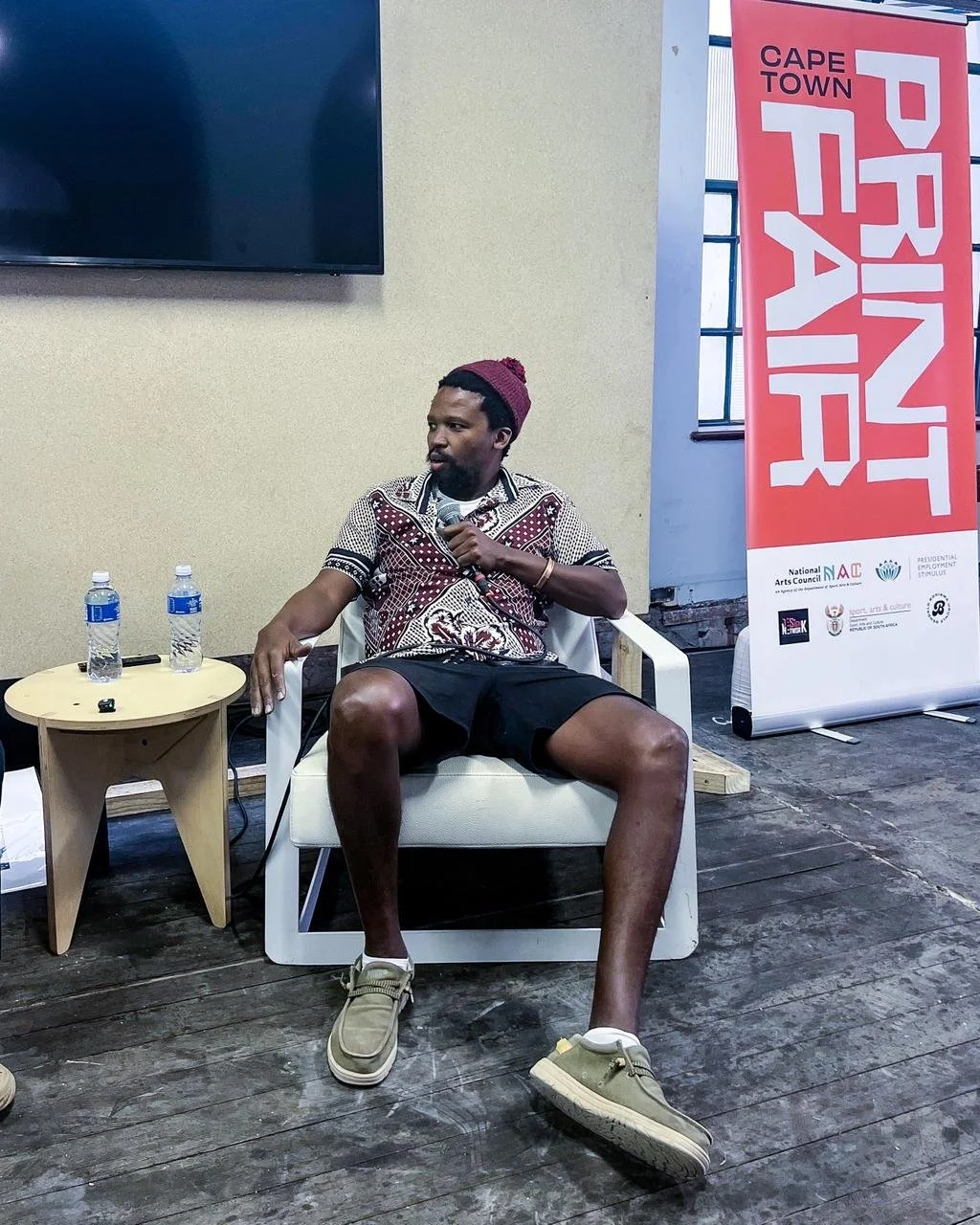
Opening night didn’t begin with a polished speech; it began with honesty. When the Founder of Cape Town Print Fair, Breeze Yoko, stepped up to speak, he didn’t present a rehearsed address or a carefully structured narrative. Instead, he let the moment unfold in real time, laughing, reflecting, remembering. What emerged was something far more powerful, a story of persistence, community and belief. He spoke about where it all started, about growing up and trying to convince his parents that art was a viable path, about being met with laughter and the familiar directive to “go get a job”, a moment he now recalls with humour, but also with clarity, because in many ways, that tension became the foundation of his journey. This fair, he explained, comes from a need he has carried for a long time, the need to build a home for something he believes deserves one. A space for artists who might otherwise give up, not because they lack talent, but because they lack community, because they don’t have somewhere to share their work, their passion, their ideas. “I was crazy enough,” he joked at one point, laughing at himself, “or maybe I just didn’t have any other skills.” But beneath the humour was something deeply sincere. Continuing to choose art, over and over again, wasn’t just a career decision; it was a necessity. Seeing the fair come together the way it did, he said, affirmed something he had been holding onto for years: “My dreams are valid.” It was a simple line, but it landed with weight. Yoko was intentional about acknowledging that this moment was not his alone. He spoke about the many people who guided him along the way, those who offered advice, shared contacts, and redirected him when he felt lost. The kind of support that doesn’t always make headlines, but makes everything possible.
Then the speech shifted, almost unexpectedly, he shared that the opening night, 27 March, marked 14 years since he and his sister lost their mother. It was something he hadn’t even realised until that morning. Standing there, reflecting on it in real time, he described it as more than a coincidence. For him, it was confirmation, A quiet, emotional alignment that this moment, this gathering, this beginning, was meant to happen. The vulnerability didn’t disconnect the room; it drew people in closer. He went on to thank the artists, many of whom had committed to the fair on short notice. The timeline, he explained, had been tight. Funding only came through in December, with the condition that it be used before April. What followed was a race against time, one that required trust, flexibility and belief from everyone involved, and still, people showed up. Judges who agreed without hesitation, Creatives who offered their skills and services, Artists who applied and even paid without fully knowing what they were stepping into. It was, as he described it, a moment where the community revealed itself in action. At its core, he made it clear, this fair is about exactly that: community. “This is a community-building exercise,” he said. “I never want to be alone.” He spoke about how the venue itself came together, not through direct access or long-standing connections, but through someone who was “put in his direction.” That connection led to conversations, and those conversations turned into belief, not only in securing the space, but in shaping it. That “angel” was Dr Luyanda Mpahlwa, a renowned Architect and Urban Designer rooted in Cape Town. Yoko called him forward with visible gratitude, describing how he stepped in at a critical moment, not just to help secure the venue, but also to design the space, facilitate key introductions, and open doors that might otherwise have remained closed. Through Design Network, Mpahlwa played a central role in transforming the idea of the fair into a physical, immersive environment. There was a sense of disbelief in the way Yoko described it, going home and asking himself, “Is this thing real?” That feeling of something bigger unfolding, of support arriving in unexpected ways, became part of the story he was telling.
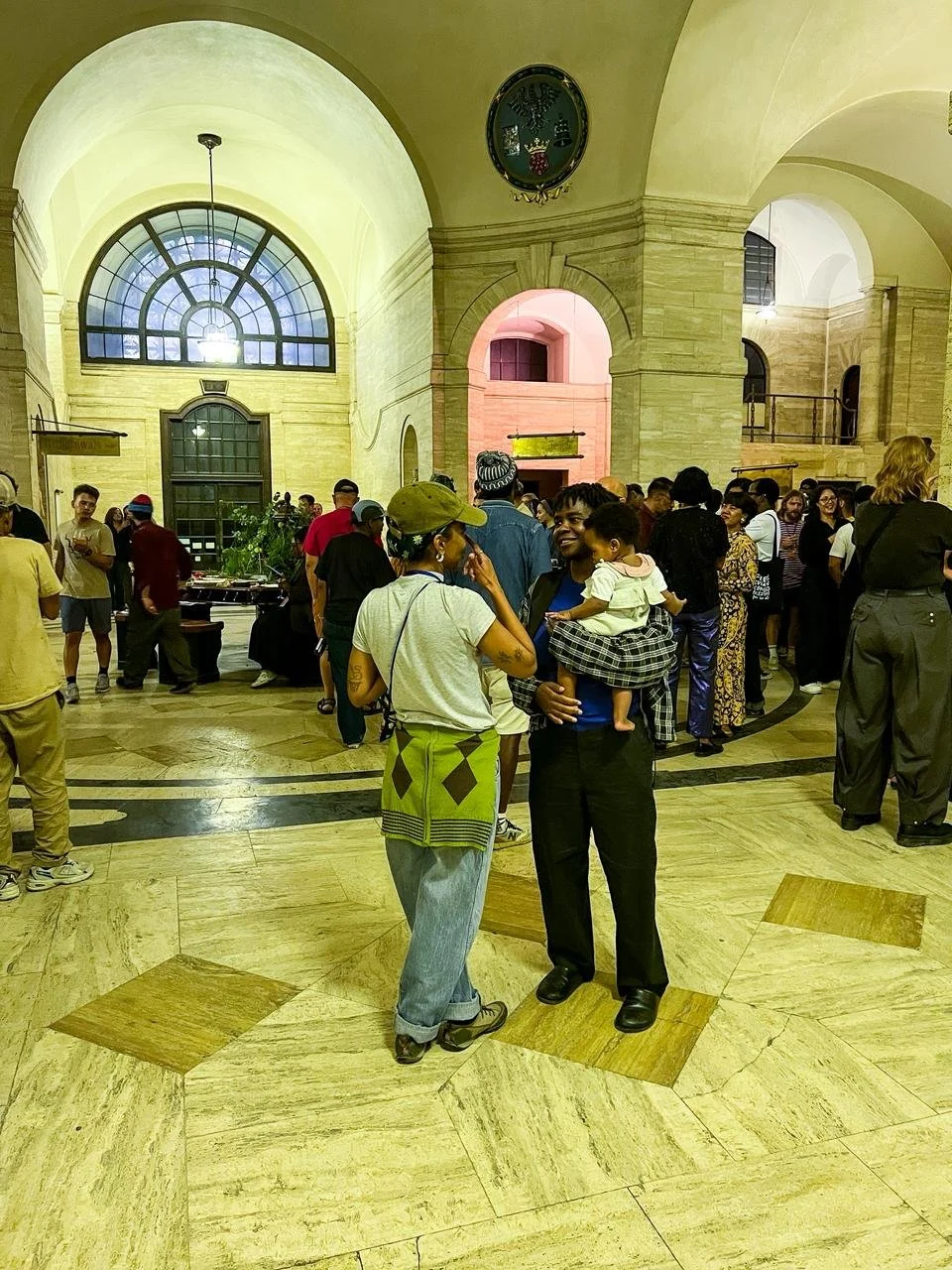
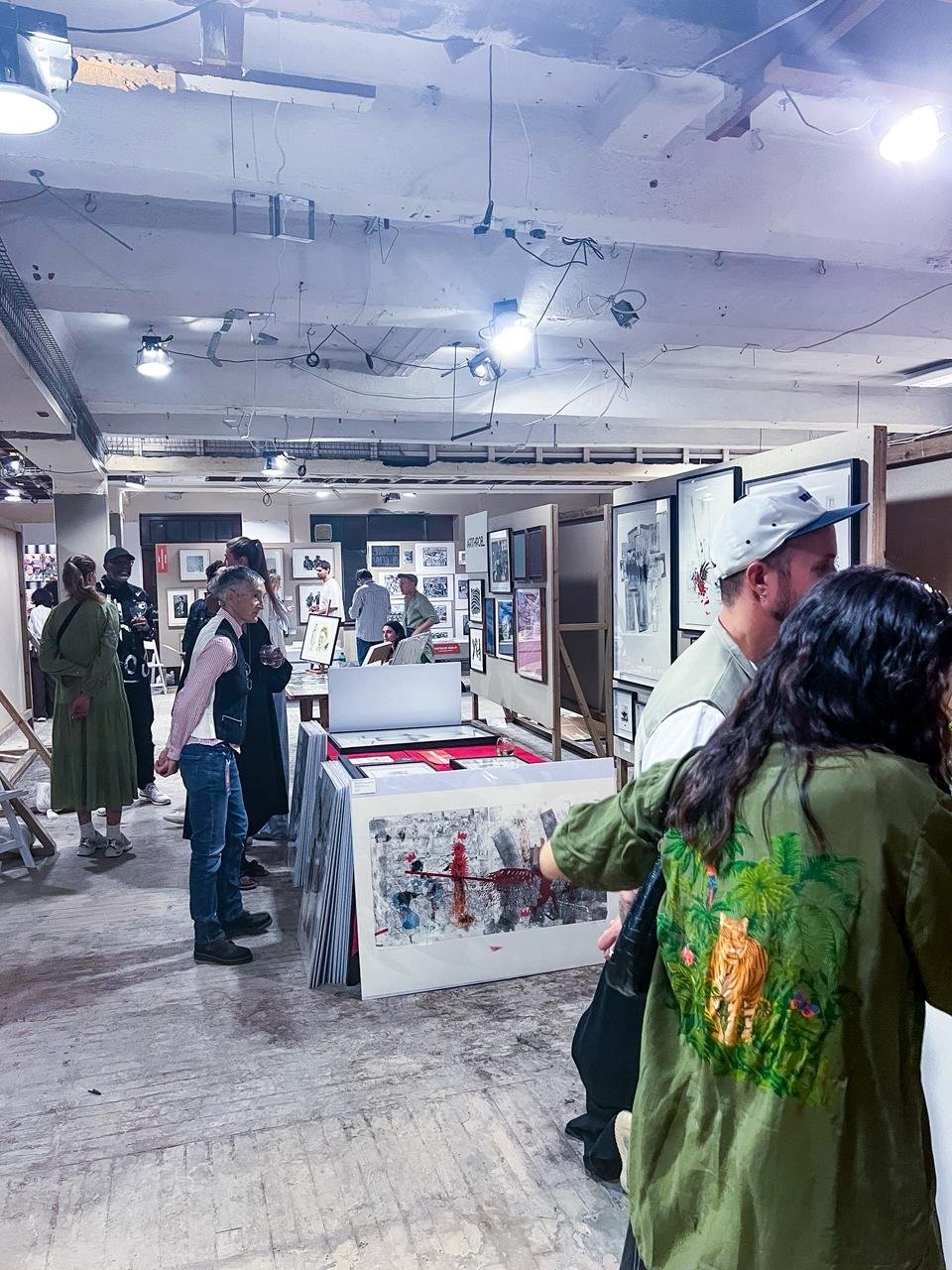
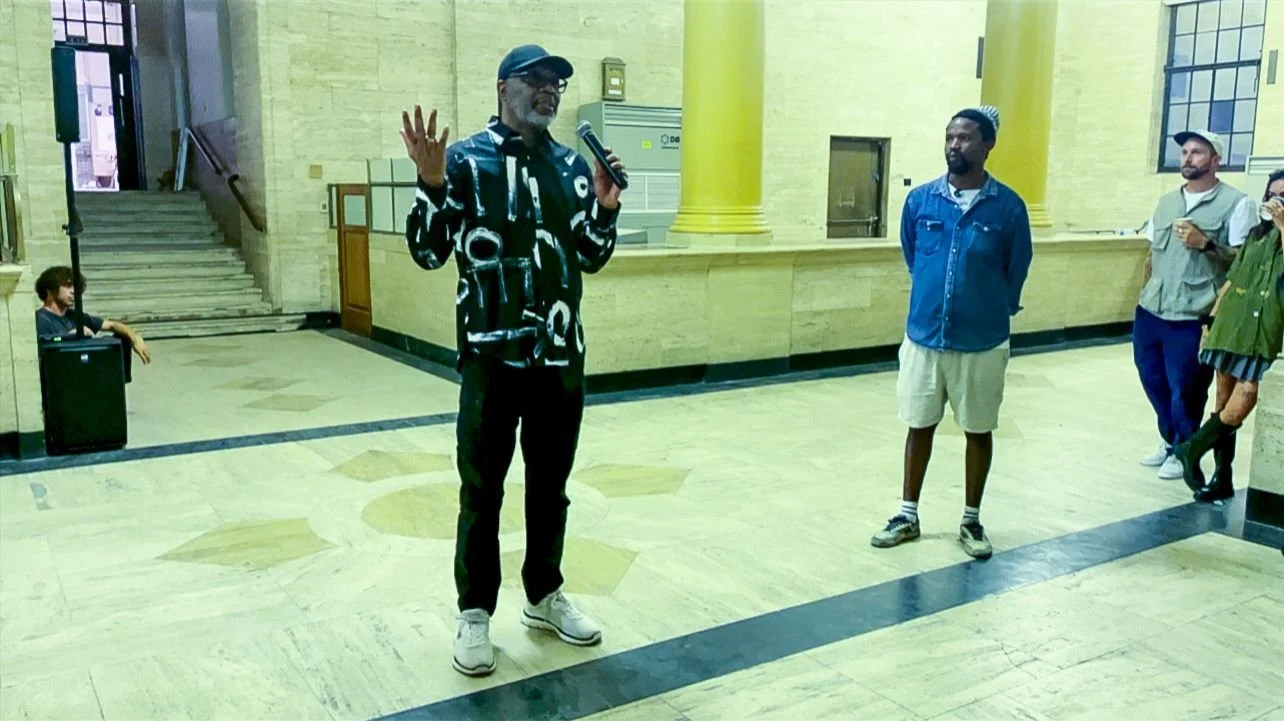
When Mpahlwa took the floor, his words expanded the story beyond the personal and into the city itself. He spoke about the building, a structure that had stood empty for a decade. For him, the project was not just about hosting an event, but about activating space. About bringing life, movement and creative energy back into parts of the city that had gone quiet. There was clear alignment between the architect and the artist. As an architect, Mpahlwa described his work as creating spaces, but also acknowledged the natural connection to print as a medium. Architecture, like printmaking, is about translation, ideas into form, concepts into something tangible that people can experience and move through. What stood out in his address was both admiration and respect. He openly credited Yoko’s confidence and determination in making the fair happen, noting that his role and that of his team were to step in and support where they could. From spatial design to facilitating access, Design Network became part of the ecosystem that allowed the fair to take shape.
Beyond the logistics, Mpahlwa framed the fair as something larger, A catalyst. “Let’s activate the city,” he urged, a call not just to those in the room, but to a broader creative community. To bring new voices, new energy and new presence into Cape Town’s urban spaces. His words positioned the fair not only as an art event, but as an intervention, one that reimagines how space, art and community intersect. At the heart of the inaugural Cape Town Print Fair is a larger conversation about visibility, ownership and the evolving definition of print in South Africa. What began as a localised initiative quickly grew into a cultural moment, one that is as much about economics and access as it is about art. Speaking about the origins and intent behind the fair, the organiser reflects on print not only as an artistic medium, but as something deeply embedded in South Africa’s political, social and creative histories. Print, in this sense, is everywhere, carrying stories from protest posters to contemporary art editions, from street culture to gallery walls.
Beyond acknowledging its presence, the aim is to foreground its importance. A key decision behind the project was its name. While alternatives such as “festival” or “expo” were considered, the word “fair” was chosen deliberately. For the organiser, this was not just a branding exercise; it was a structural decision. A festival, they argue, suggests celebration. A fair, however, signals exchange. It points to an economy, to transactions, to livelihoods. In a context where artists are often excluded from sustainable income streams, that distinction matters. The naming also became an act of claiming space. Research revealed that no major print fair had previously existed in Cape Town or South Africa under this framing. Naming it directly was, in their words, a way of “claiming the city” and asserting the legitimacy of a local print culture that has often been overlooked or absorbed into broader art fair structures. That boldness, however, came with scrutiny. The question of “who gets to claim print culture?” lingered in the background, sometimes unspoken, but felt through tone and reception. Yet the response to the fair suggests that the need for such a platform was widely shared.
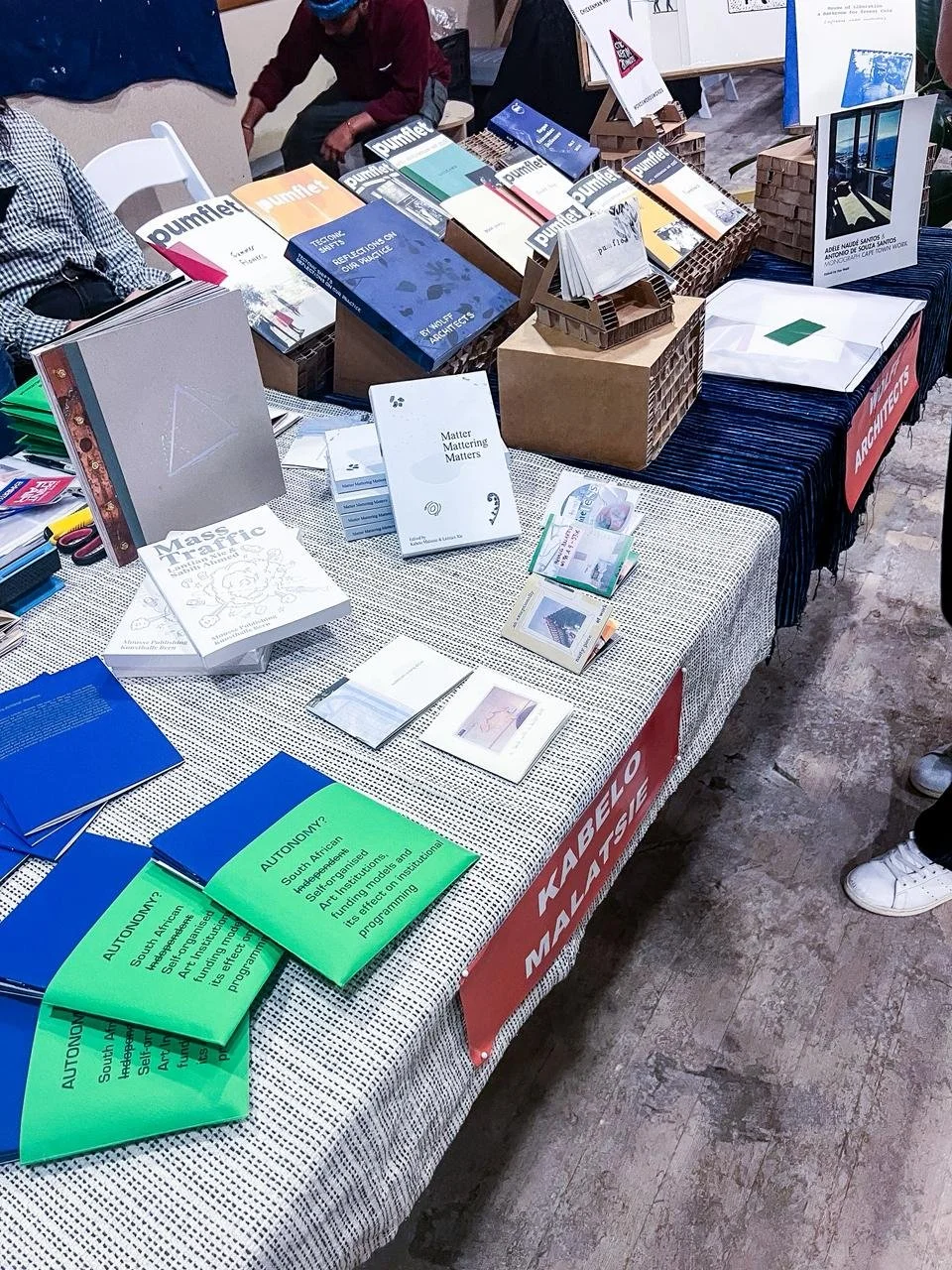
One of the most significant outcomes of the fair has been its expansion of what print can be. Visitors encountered not only traditional print editions, but also zines, stickers, digital works and experimental material practices. This inclusivity challenged the often rigid boundaries of “fine art printmaking,” which typically privileges limited editions and institutional validation. The fair positioned print as broader, rooted in street culture, graffiti, illustration, publishing, and digital production. Yoko, who comes from a graffiti and street art background, emphasises that print has always been part of that world. Walls are one output, but reproduction through screens, risographs, and other methods is another. In this framing, graffiti artists are already printmakers; they operate outside traditional recognition systems. Digital artists were also deliberately included, reinforcing the idea that print is not defined by medium alone, but by reproduction, circulation and access. A central concern throughout the conversation is sustainability, not only for artists but also for the platform itself.
There is a clear awareness that, while the fair has been successful, it remains fragile. Limited time, limited funding and limited infrastructure meant that much of the work depended on informal systems, social media visibility and personal effort. Without a website or a large organisational structure, communication gaps emerged, artists were left out of announcements, and logistics were stretched thin. Still, there is hesitation around rapid expansion. Scale, in this context, is both opportunity and risk. Growing too quickly could compromise the intimacy and accessibility that made the fair meaningful in the first place. The focus is on strengthening foundations, better planning time, stronger resources, expanded partnerships and more deliberate outreach beyond digital platforms. There is also a recognition that access costs matter. While participation fees such as R2 500 may be manageable in some contexts, they remain significant barriers in others. The challenge is to sustain the ecosystem without excluding the very communities it seeks to uplift. Beyond the exhibition, the fair opens up broader questions about livelihood. For many artists, printmaking is not just a creative pursuit; it is an economic strategy. Yet opportunities to monetise print-based work remain limited outside institutional or commercial art spaces. Workshops, editions, zines and collaborative projects all form part of a wider ecosystem that could potentially support artists more sustainably.
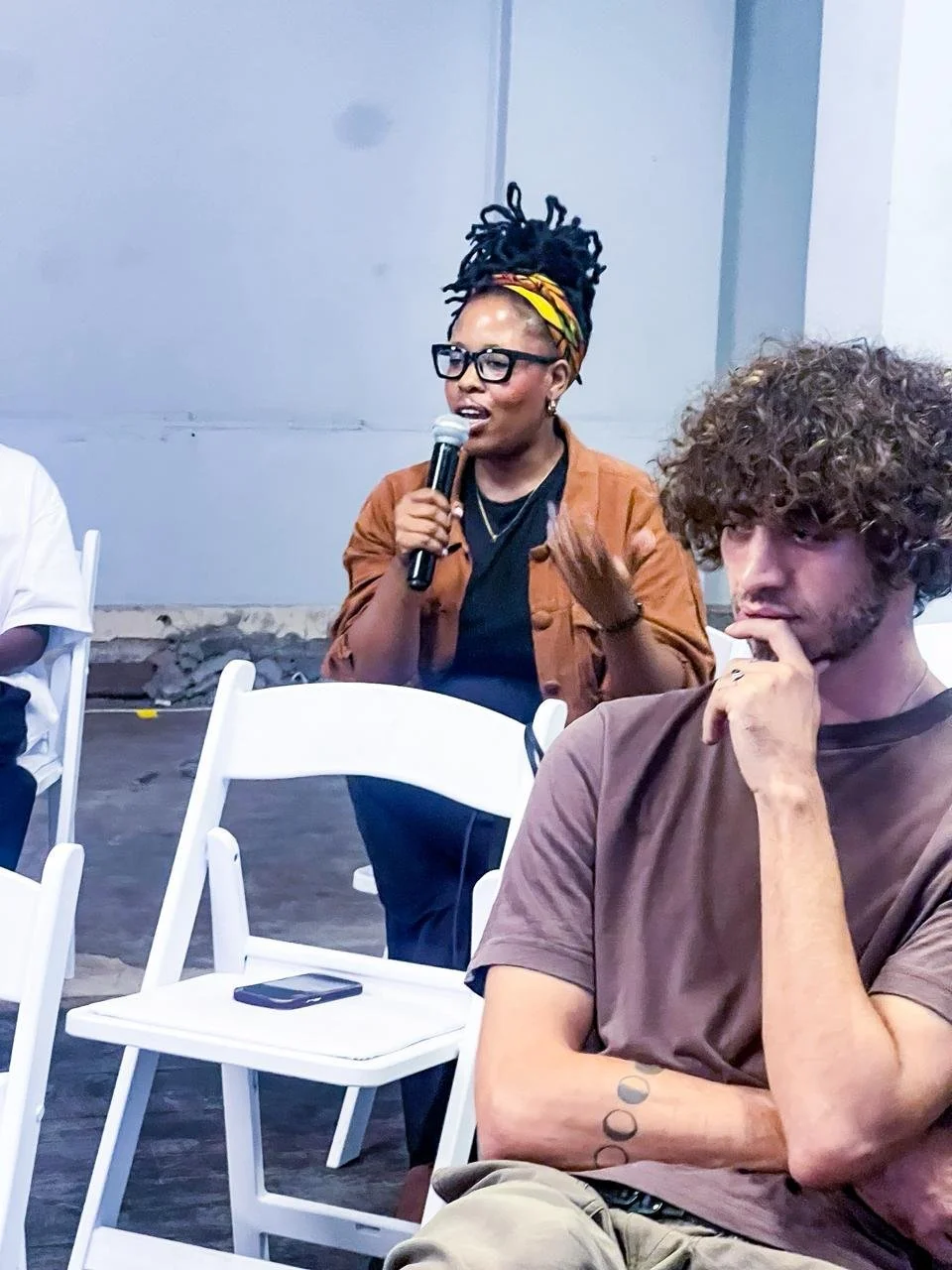
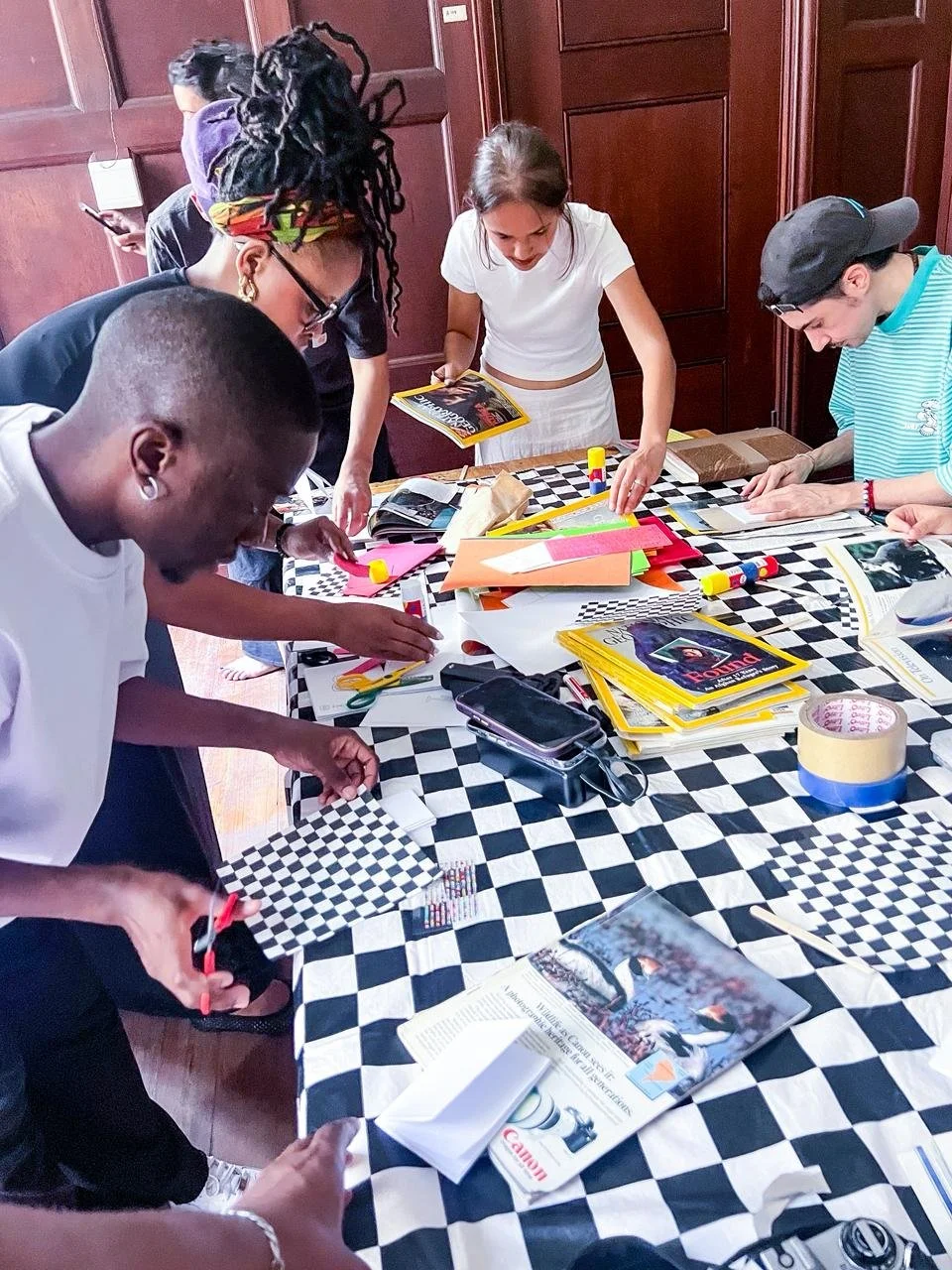
However, tensions arise between accessibility and income generation. Some initiatives are offered free of charge to ensure access, particularly for under-resourced communities, while others may require more structured funding or donation-based support. The organiser openly acknowledges this tension: how do you charge for knowledge-sharing while also ensuring that those who need it most can access it? One of the most celebrated aspects of the fair has been its engagement with younger audiences through zine-making workshops. Zines, often handmade and freely assembled, emerged as a powerful entry point into print culture. Their accessibility allows participants to experiment without technical barriers or institutional expectations. For many, it is the first time their work is named as “printmaking” at all. The response from young participants has been deeply affirming, reinforcing the idea that print education should be more widely integrated into school systems.
The absence of formal exposure, it is argued, limits how young creatives understand their own potential. In an increasingly digital world, the fair also raises a larger philosophical question: why print at all? For many participants, the answer lies in materiality and memory. Print becomes a form of archiving, something physical that resists the ephemerality of digital feeds. It carries permanence, even when produced in small, fragile, or handmade forms. It is also about presence. To print is to declare that something exists outside of the algorithm, outside of the scroll and into shared physical space. Despite its challenges, the fair is widely understood as a necessary intervention. Artists, audiences and organisers alike describe it as overdue, a space that fills a long-standing gap in South Africa’s creative landscape. Its future remains open-ended. Whether it expands into multiple cities, becomes a recurring national platform, or evolves into something entirely different is still undecided. What is clear, however, is the intention to build slowly, meaningfully and inclusively. For now, the Cape Town Print Fair stands not only as an event, but as a proposition that print culture in South Africa deserves visibility, infrastructure and a home that reflects its diversity.
