
The Feeling That Stayed, Notes from Cape Town Pride 2026
By Wakhe Sebenza
On Saturday, 28 February, the streets of Cape Town came alive as thousands gathered for Cape Town Pride 2026. The day began with the Pride Parade, not as a celebration, but as a powerful act of showing up. The march started in De Waterkant and moved along Somerset Road through Green Point, ending at the Green Point Track. People moved through the streets carrying more than just flags, they carried memory, grief and resistance. Songs of struggle filled the air and many held up images of those who have lost their lives as a result of homophobia. It was a collective cry, a refusal to forget and a demand to be seen in a world that has too often tried to erase them.
One image in particular, was impossible to miss, a large portrait of Muhsin Hendricks at the forefront of the parade. Known as one of the world’s first openly gay imams, Hendricks dedicated his life to creating space for queer Muslims, challenging deeply rooted beliefs within religious communities and offering a message of faith that did not exclude identity. His presence in the march, carried by others, felt symbolic, a reminder of both courage and the cost of living truthfully in spaces that have not always been accepting. In that moment, his image became more than a portrait; it became a statement of defiance, remembrance and the ongoing struggle for dignity and inclusion.
After attending Cape Town Pride, I moved almost immediately into the next wave of commitments with the Muholi Art Institute. There was no pause, no moment to sit with what I had just experienced, no time to write it down while it was still fresh. The days carried on, full and demanding, but Pride stayed with me. Every day, somewhere between meetings, workshops and quiet moments in transit, a thought kept returning: I still need to write about Pride. It sat there, persistent. At times, I worried that I had missed the moment, that the urgency had passed, that the feeling had faded, that I had somehow lost the momentum to capture it truthfully. But I’ve come to understand something in that delay. Pride isn’t just an event you attend; it’s something you feel. It doesn’t expire when the parade ends, it doesn’t disappear when the flags are folded away, it lives in the body, in memory, in the quiet echoes that resurface when you least expect them. What I witnessed wasn’t just a celebration; it was presence: people arriving fully as themselves, soft, loud, layered, complex. It was chosen families holding each other in ways that felt both tender and defiant. It was joy that carried history within it, the kind of joy that knows struggle, that remembers those who made this visibility possible, that refuses to shrink even in the face of ongoing realities. In South Africa, Pride exists in a powerful tension. There is protection written into law and yet, for many, safety is still not guaranteed in everyday life, So the act of showing up, of taking up space, of being seen, becomes more than celebration. It becomes a declaration, a refusal, a remembering.
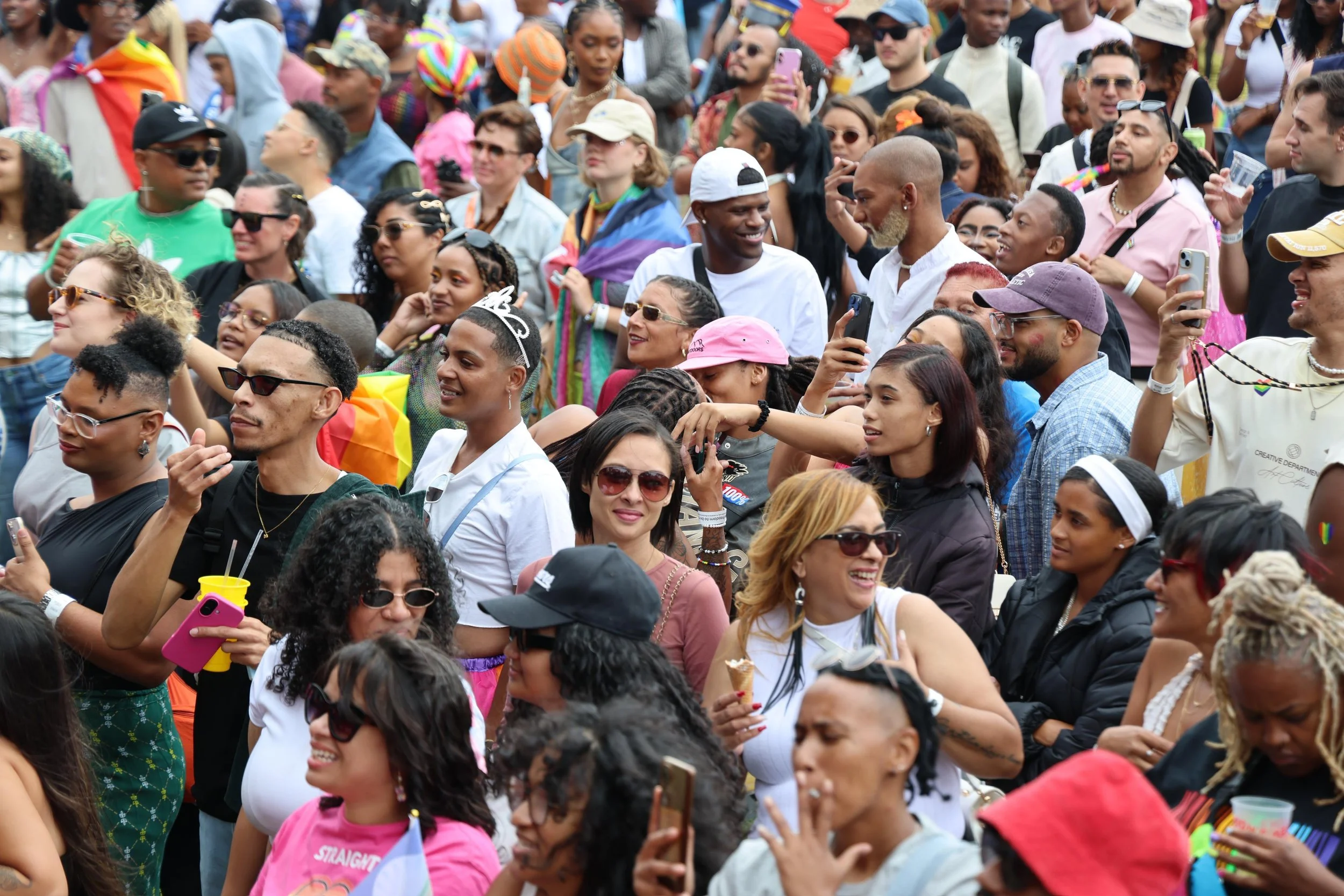
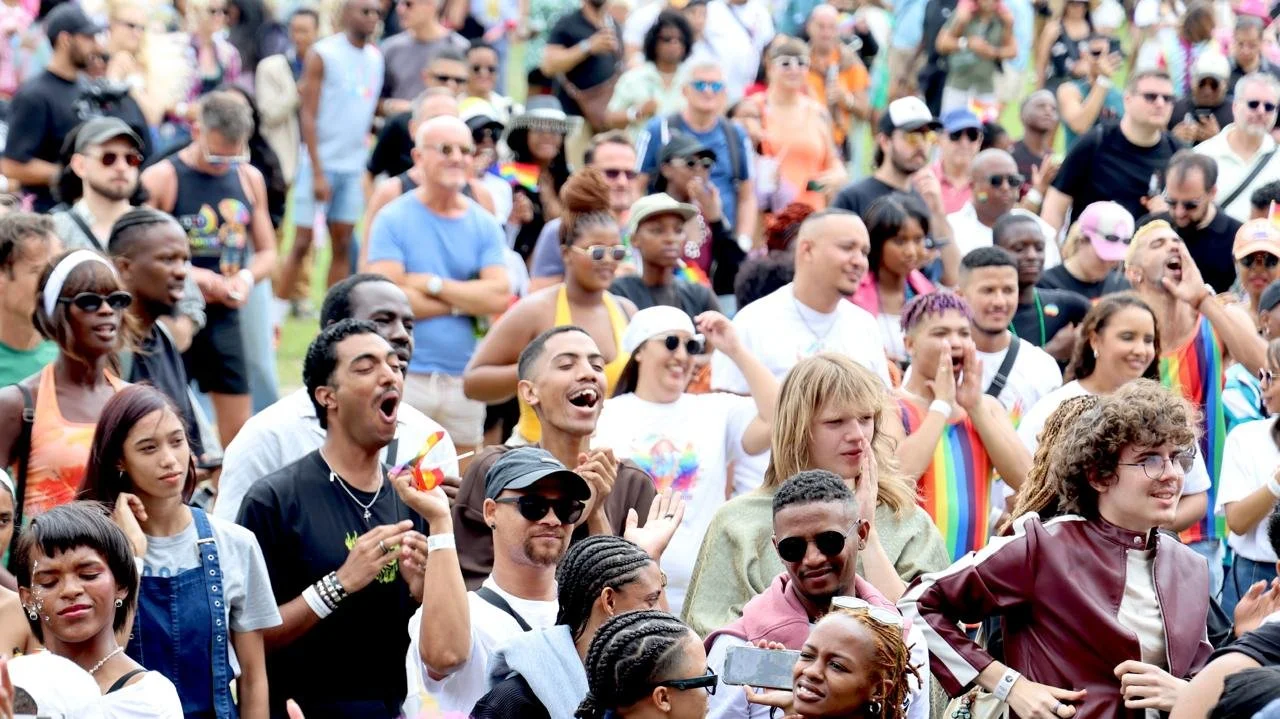
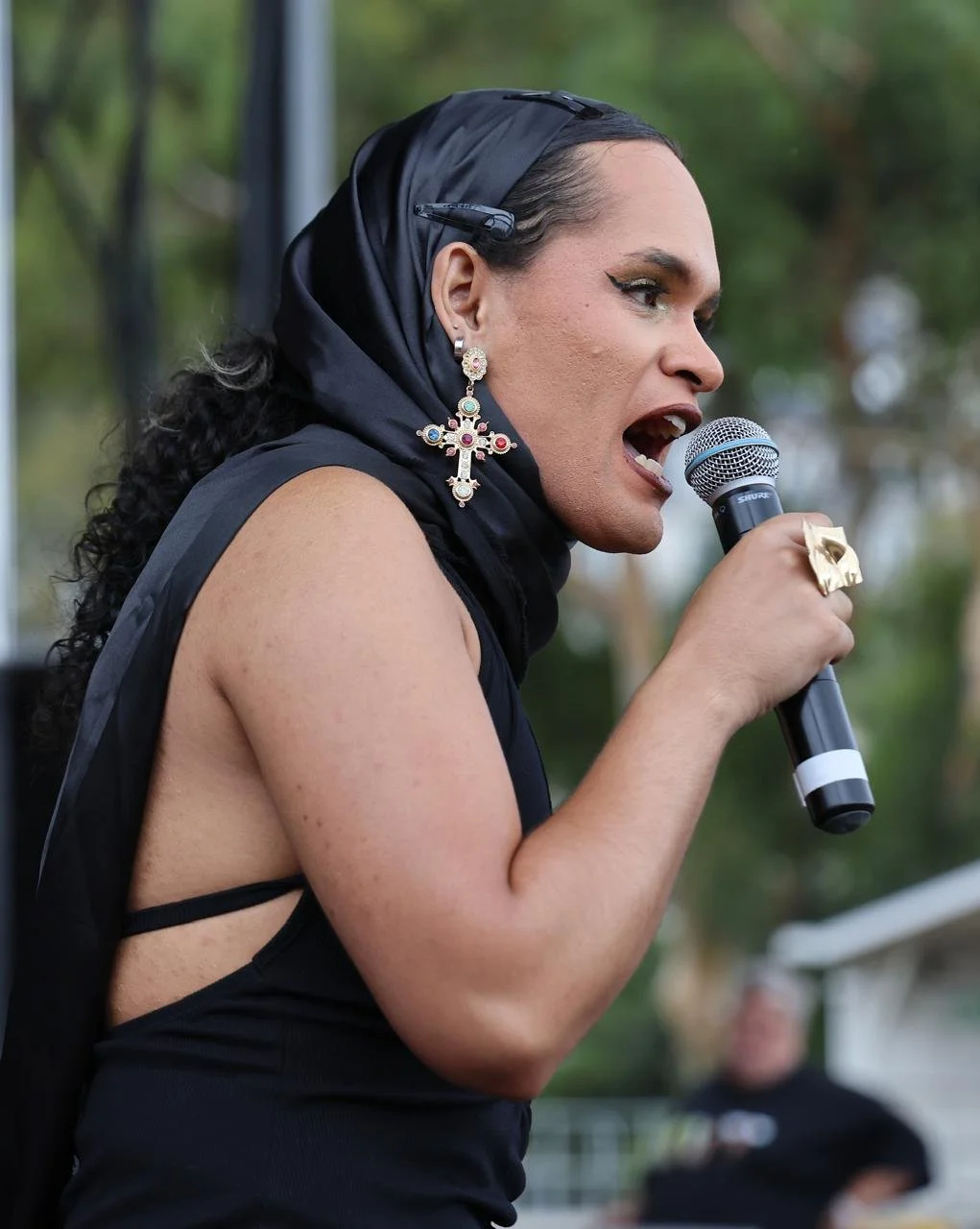
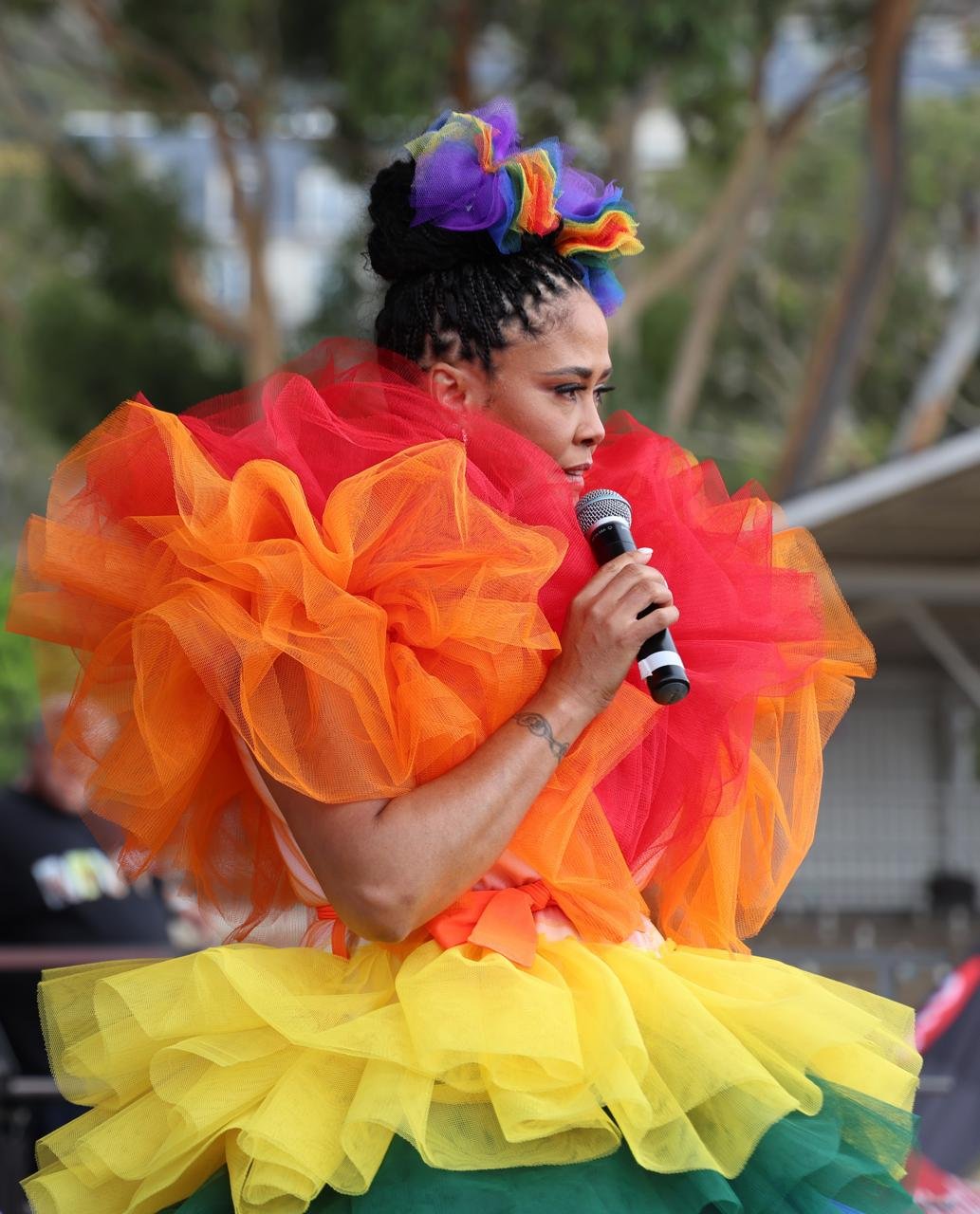
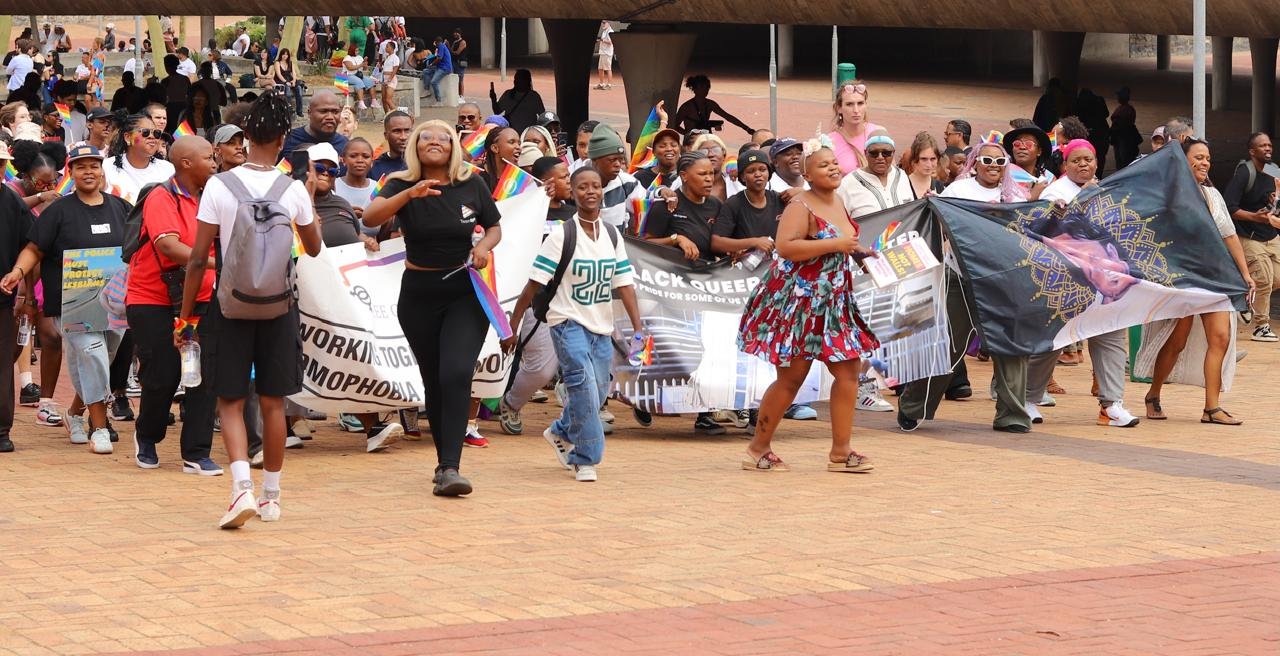
All images courtesy of Lindeka Qampi
There’s another conversation that often comes up around Cape Town Pride, the fact that it’s not a free event. Many people are critical of this, and I get it. Limiting access to such a meaningful gathering because of financial means doesn’t sit easily with the spirit of inclusion Pride represents. For those who cannot afford a ticket, it can feel like exclusion and that tension is real and important to acknowledge. At the same time, organizing an event of this scale from the parade to security, stage setups, permits and programming requires significant resources. Sponsors step in to make it possible and ticket sales are one of the ways the event can actually take place. In that sense, when we pay for tickets, we are not just buying access for ourselves we are actively contributing to the creation of a space for the community, a platform for visibility and an ongoing legacy of Pride in the Mother City. This doesn’t erase the inequities, but it does open a way to think of participation differently, as a form of collective support. Each ticket helps sustain the event and its reach, amplifying voices that might otherwise remain unheard. Pride becomes not just a day in February, but a project we all invest in, a shared endeavor to keep the conversation, visibility and activism alive.
While the parade carried the weight of memory and resistance, another side of Cape Town Pride unfolded as the day moved forward. The main event space opened into something lighter, more expansive, a space where the community could exhale Hosted by Stellar Rose and Nkosinathi Sangweni Waka Mtshali, the programme was held with care, energy and intention. They guided the crowd through the day with a presence that felt both grounding and celebratory, striking a balance between holding the significance of Pride and allowing moments of joy to fully emerge. Stellar Rose, in particular, moved seamlessly between roles, not only as an MC, but also stepping into performance. Doubling as a lip-sync artist, she brought a different kind of expression to the stage, one that was bold, playful and unapologetically alive. It was in these moments that the atmosphere shifted, where the heaviness of the march gave way to something softer, something freeing. The stage became a space of release. Performance after performance carried its own texture, vibrant, expressive and deeply rooted in identity. There was beauty in the diversity of it all, different bodies, different voices, different stories, all existing together in one shared space. It was here that Pride revealed another layer of itself, not just as protest, but as celebration.
A celebration of survival, A celebration of self-expression. A celebration of being here, still. Maybe that’s the duality of Pride, it holds both the grief and the joy, The resistance and the release, The remembering and the becoming.
As the day unfolded, I found myself wanting to stay longer, to document more, to move deeper into the crowd, to hold onto each moment just a little bit more. There were still stories to capture, faces to remember, conversations waiting to happen. But like so many things, time pulled me away, Other commitments called and I had to leave before I was ready. Maybe that’s the nature of this work, of being present, but never fully able to hold everything at once. Later, I heard that not long after I left, the rain came and Pride came to an early close. There’s something poetic in that. Almost as if the day carried everything it needed to, the grief, the resistance, the joy, the release and then gently folded in on itself. I think about that moment often. About what I missed and what I managed to witness. About the images I captured and the ones that will live only in memory, But maybe that’s okay. Because Pride isn’t just an event you attend, it’s something you feel.
