
Photography and Fabulation: Zanele Muholi in Juiz de Fora
By Dr Lydia-Anne Plaatjies
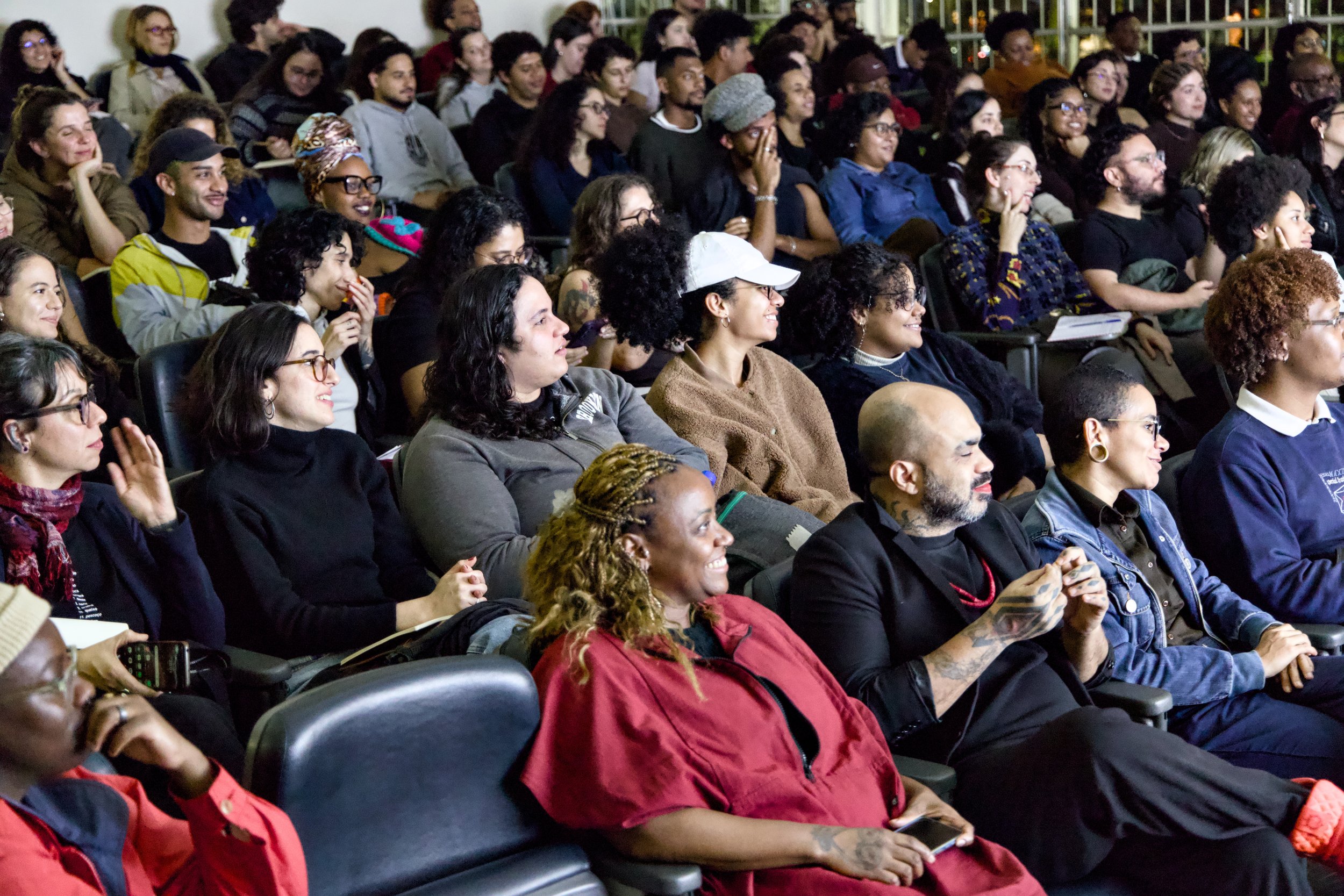
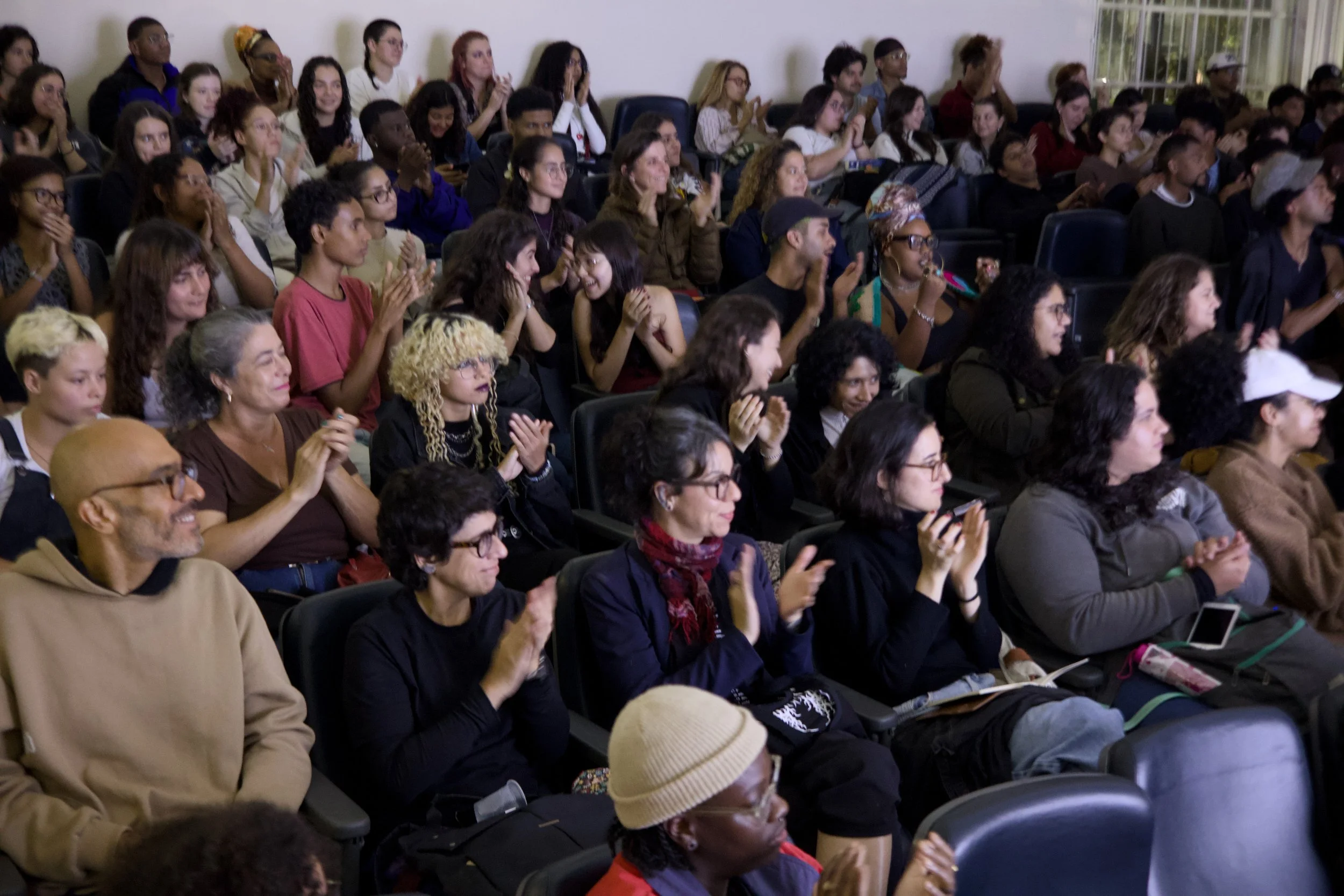
Guests gathered at UFJF for a conversation on social justice, imagery, and belonging. | Photograph by Lindeka Qampi.
More than two hundred of us came together in a winter evening in Juiz de Fora for an encounter that felt less like a lecture and more like a collective gathering of witness. Visual activist, photographer, art practitioner Prof. Zanele Muholi stood at the centre of the amphitheatre, and for a couple of hours the space became a living archive - a place where seeing and being seen were acts of profound care.
The evening was part of Photography and Fabulation, a programme developed by the Beyra Festival. It was designed by Professor Ana Paula Vitorio of the Faculty of Communication (Facom), Professor Carolina Cerqueira of the Institute of Arts and Design (IAD), and doctoral researcher Red from the Graduate Program in Education (PPGE), in partnership with the Audiovisual Women of Odun Institute (iAMO, Salvador). It was an open invitation, extended via a website, and yet what unfolded felt deeply intimate.
About the Beyra Festival
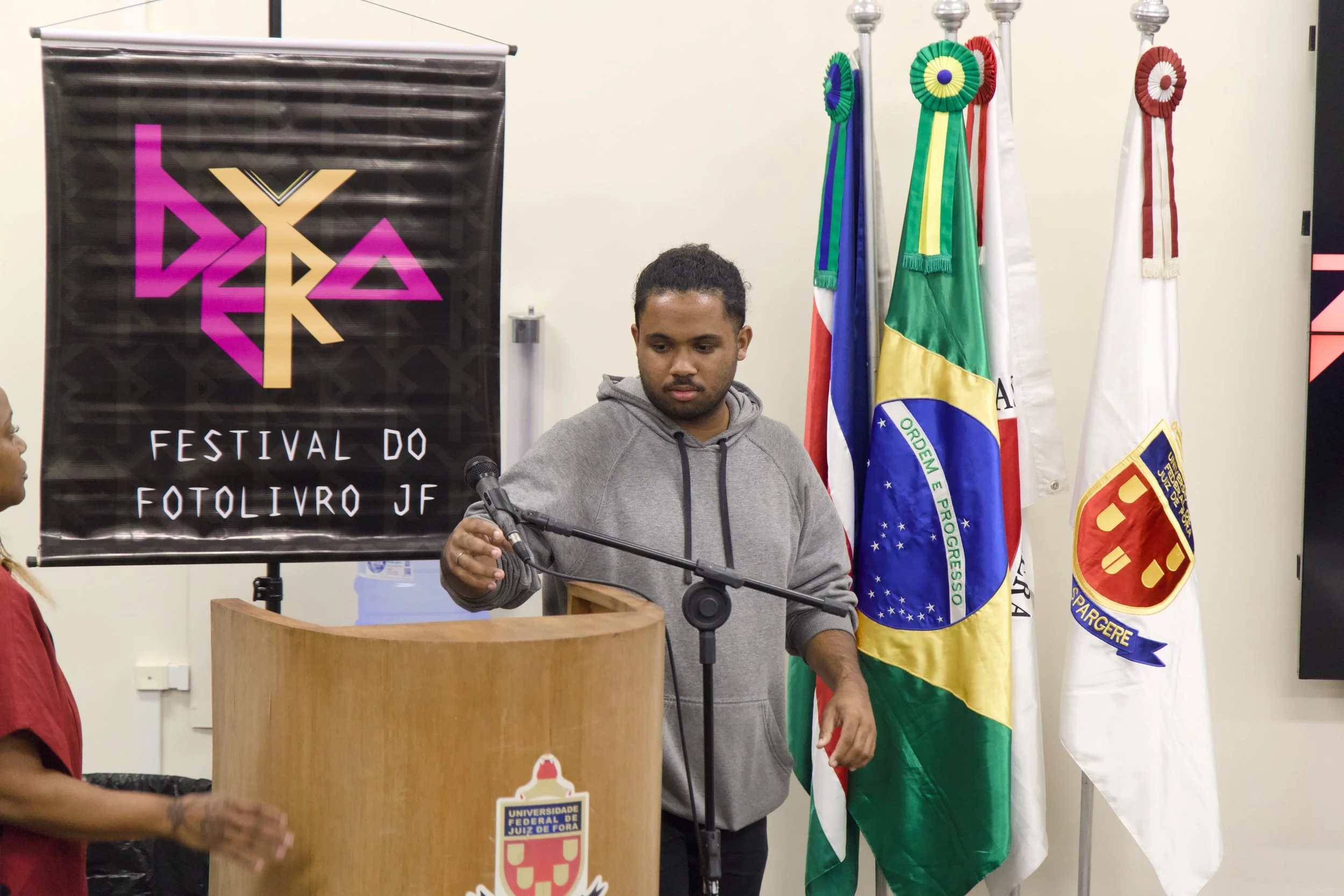
Beyra Festival creates spaces where art, education, and activism converge. | Photograph by Lindeka Qampi.
To understand this gathering, you need to understand the ground from which it grew.
Beyra Festival is a multidisciplinary platform rooted in the Brazilian academic and cultural landscape, driven by a commitment to social justice, decolonial thinking, and the transformative power of the arts. Born from collaboration between the Federal University of Juiz de Fora (UFJF) and a network of artists, researchers, and community-based organisations, Beyra positions itself at the intersection of communication, education, and visual culture.
The festival takes its name from the Portuguese word beira - the edge, the margin, the threshold. It is a space that deliberately centres voices and bodies pushed to the periphery, insisting that the edge is where the most urgent conversations happen. Through exhibitions, talks, workshops, and film screenings, Beyra invites participants to reimagine how we see, who gets to be seen, and what stories are worthy of being held in the archive.
Photography and Fabulation is one of Beyra’s signature programmes. It is curated series of encounters that treats the photographic image not as a fixed document, but as a site of possibility, imagination, and truth-telling. Hosting Prof. Zanele Muholi within this framework was both a natural alignment and a profound moment of resonance: an artist whose life's work is to build an archive of those the world has tried to erase, welcomed into a festival dedicated to the very same commitment.
This is the soil in which our evening took root.
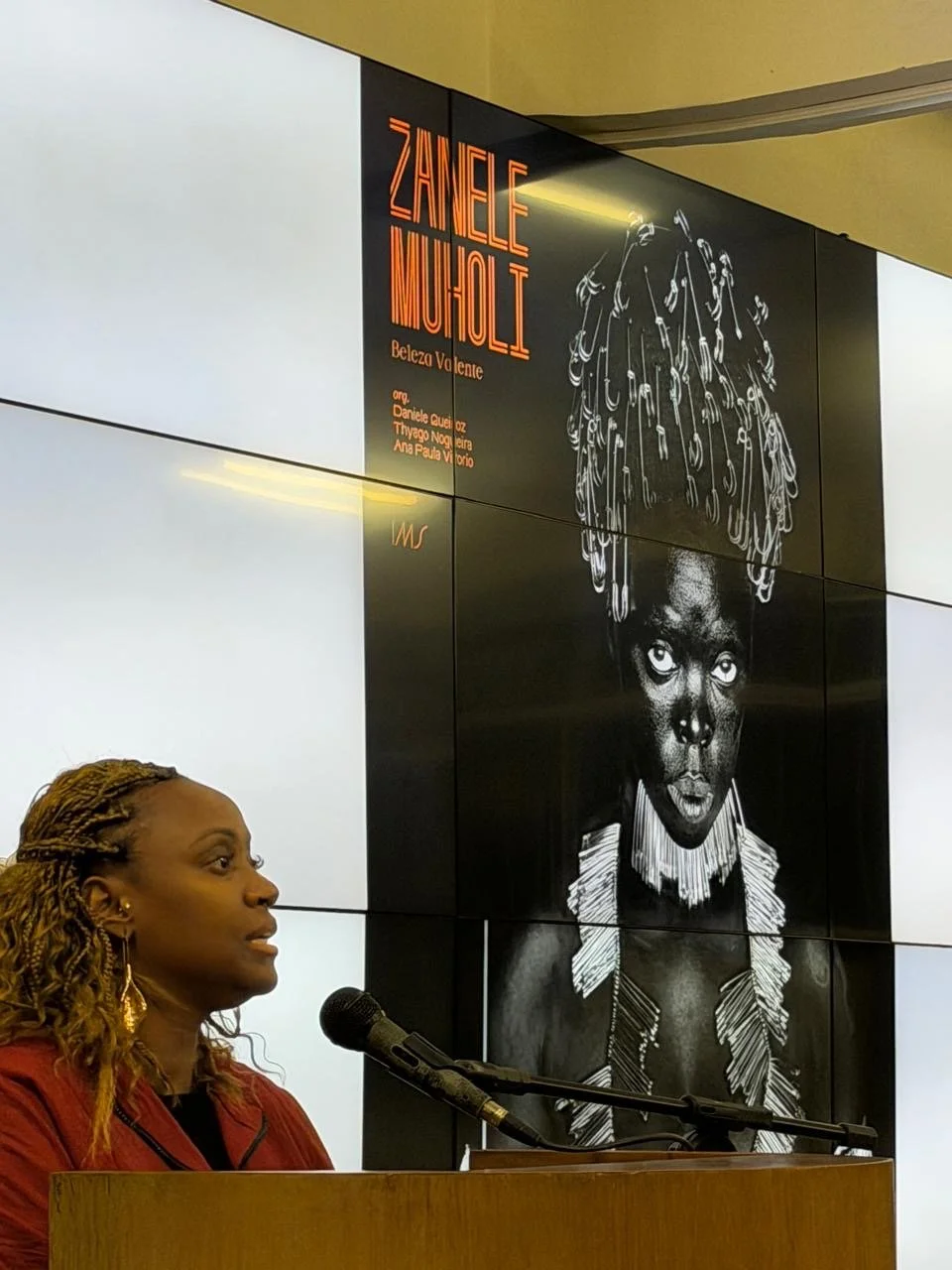
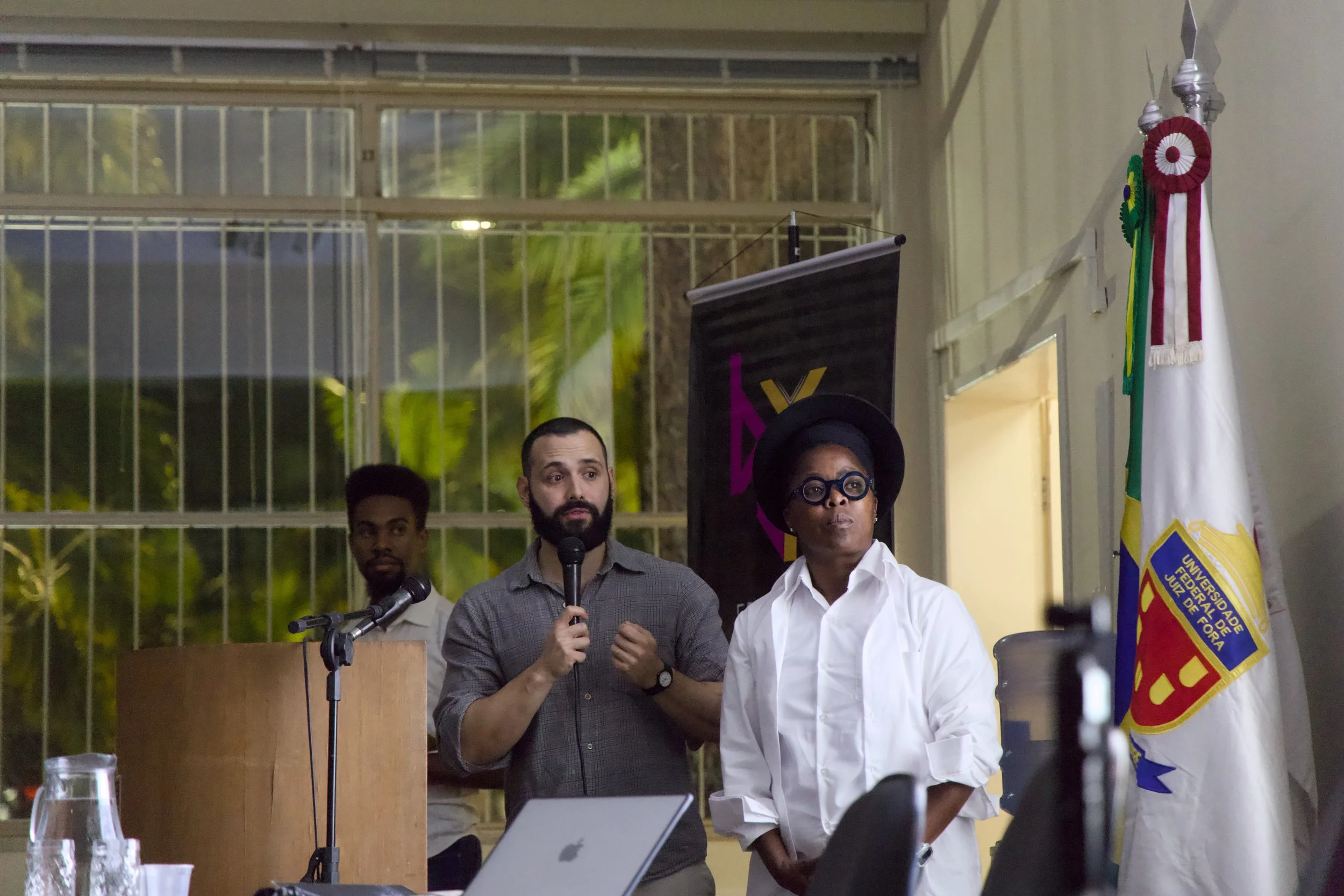
Prof Ana Paula Vitorio introduces Muholi and frames the evening as a necessary cultural exchange. | Photography by Prof Zanele Muholi
In her introduction, Prof Vitorio underlined the importance of this cultural exchange and the essential role that imagery plays in driving meaningful societal transformation. She made it clear: this was not simply an artist’s talk. It was an invitation to start a conversation about social justice and representation through the lens of a camera.
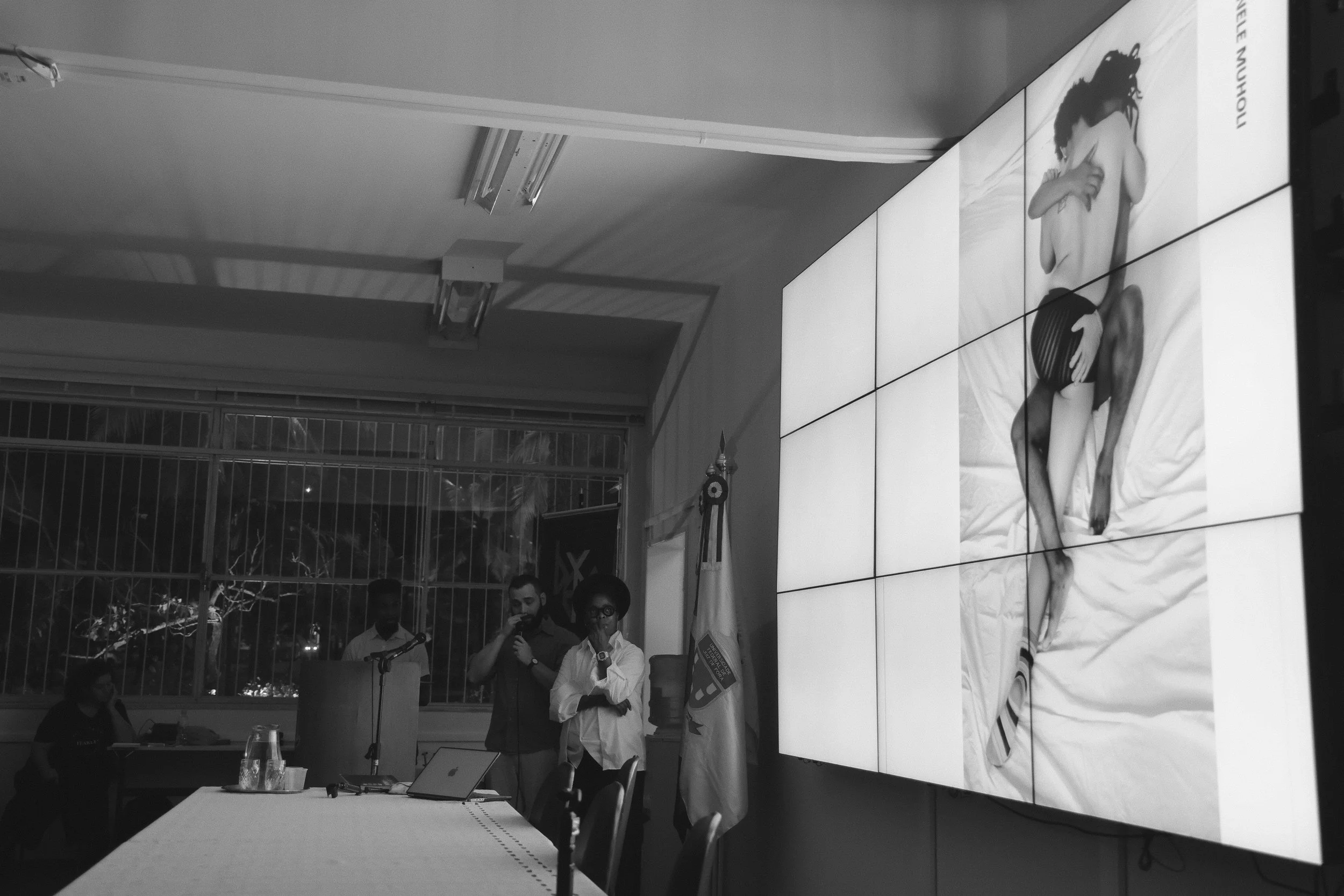
Prof Muholi speaks alongside their work—images that serve as a bridge to a more inclusive narrative. | Photograph by Lindeka Qampi.
And then Muholi began. Not with a formal statement, but with a declaration of self:
“I’m queer. I represent those in the closet and those dying in the closet, people who look like me, people who love like me. Politics. Civilians of black bodies.”
It was a grounding. A naming of who stands in the frame and who is too often left out.
Muholi’s conversation moved seamlessly between artistic expression and political advocacy. While showing their photographs - one after another, luminous and unflinching - they explained that these images act as a bridge. They educate. They challenge systemic bias. They build what Muholi calls an active archive: one that pushes back against erasure and violence, rewrites representation, and opens up space for dialogue.
“I am intentional about my work.”
And you can feel it. Every portrait holds a person, a community, a politics of presence.
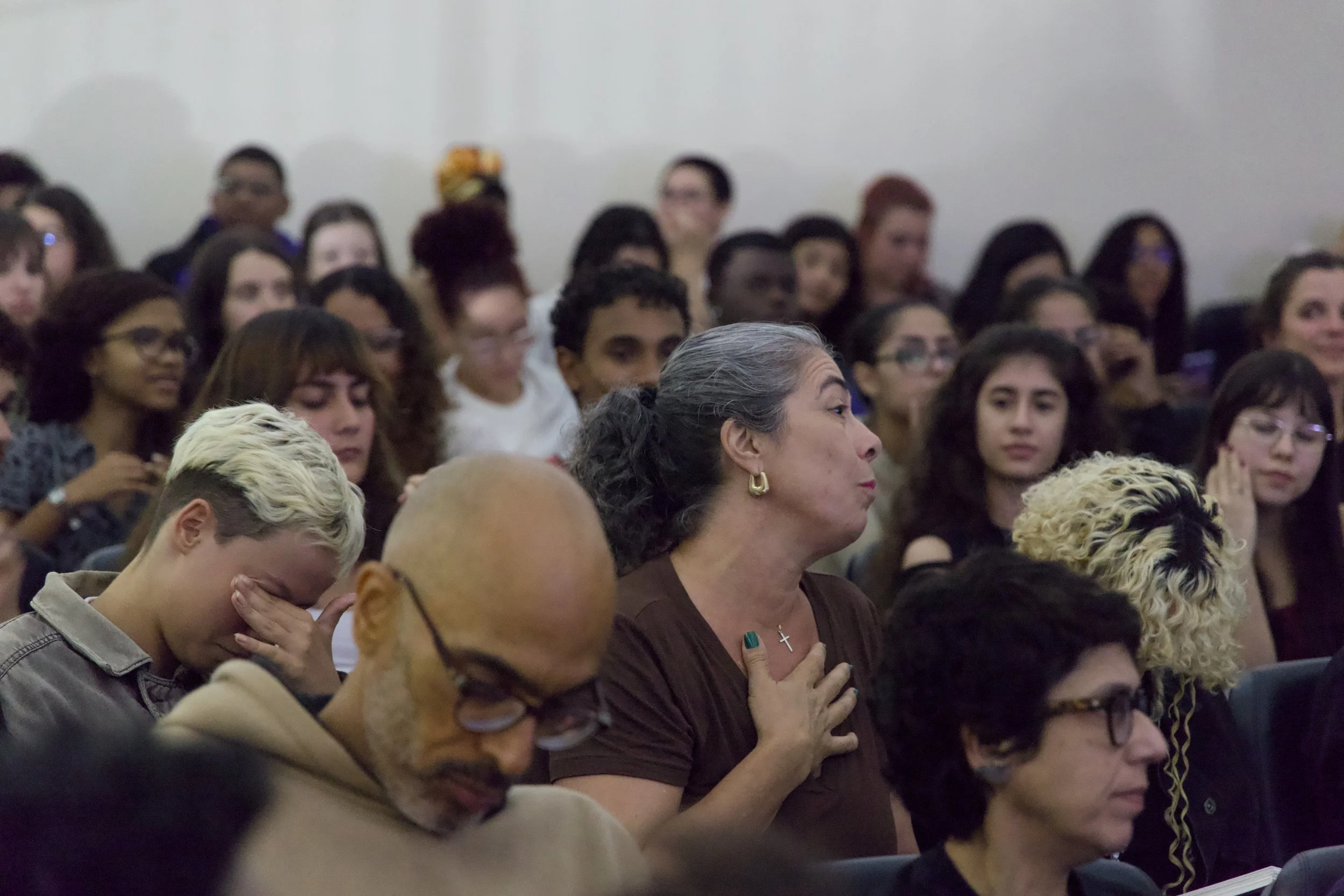
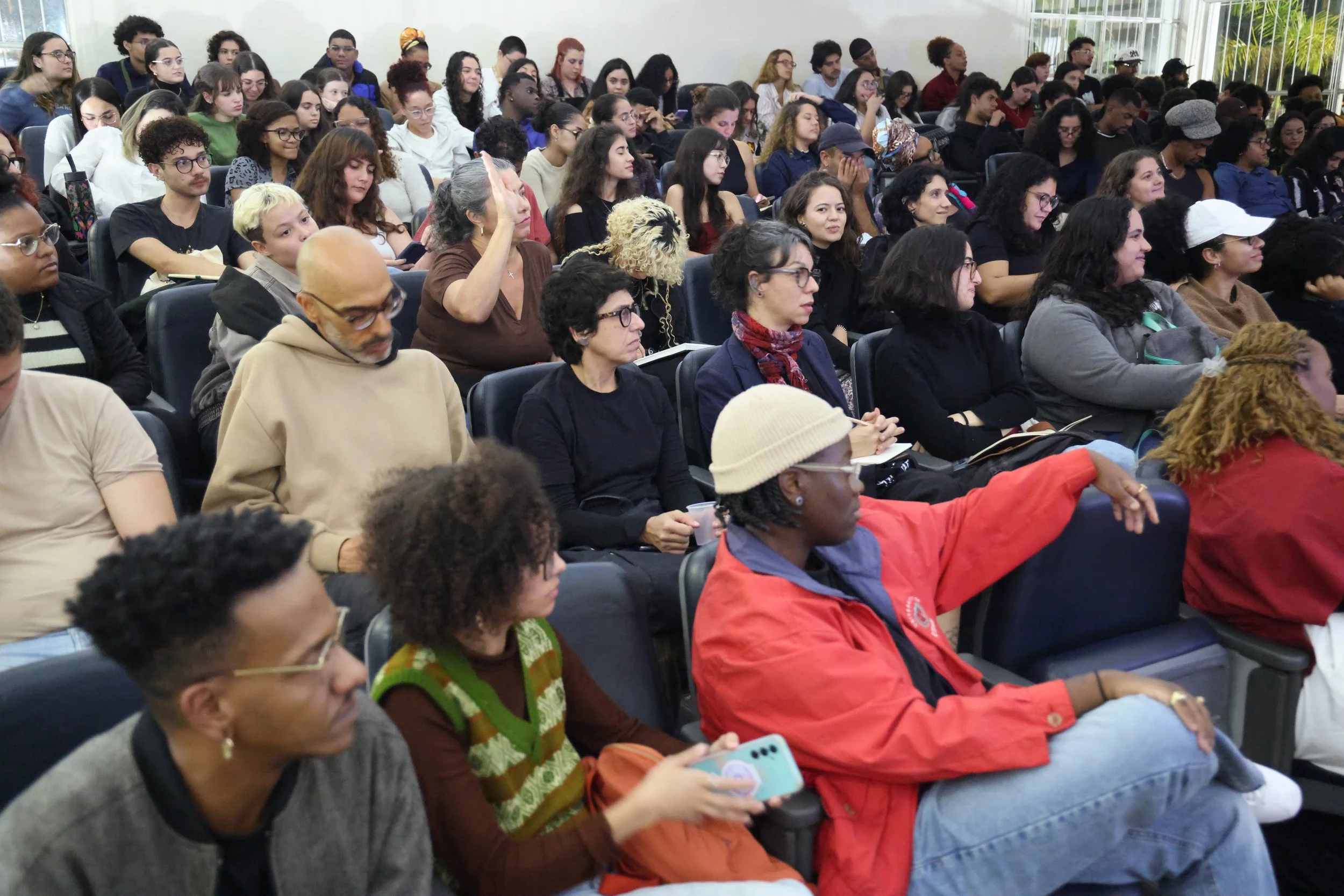
The dialogue deepens as guests ask questions that are as much about being as about making. | Photograph by Lindeka Qampi.
The room opened. Questions from the academic and artistic community rose from the floor, and Muholi responded with the same presence their photographs carry.
What references do you use?
“My references are those of everyday people - my mother, communities as a collective of my visual activism.”
Why Brazil?
“I love Brazil, I love the beautiful energy, the language. I want to learn from Brazil … this is where I want to exhibit.”
And then came a question that changed the temperature of the room: How do you deal with those who have passed away and are now part of your archive? How do you carry the lost while still remembering them when you speak about your work?
A pause for those who cannot tell their own stories. | Photograph by Lindeka Qampi.
Muholi answered with depth, empathy, and celebration. I remember their words settling over us like a responsibility we could all hold together:
“There are so many people in different parts of the world who can’t tell their story, conversations that will never happen. The silent voices. And our role - those of us who are left behind, those who have the freedom to represent the silent voices - is to do exactly that.”
In that moment, the archive was not just about preservation. It was about honour, about taking up the call when the voice has gone quiet.
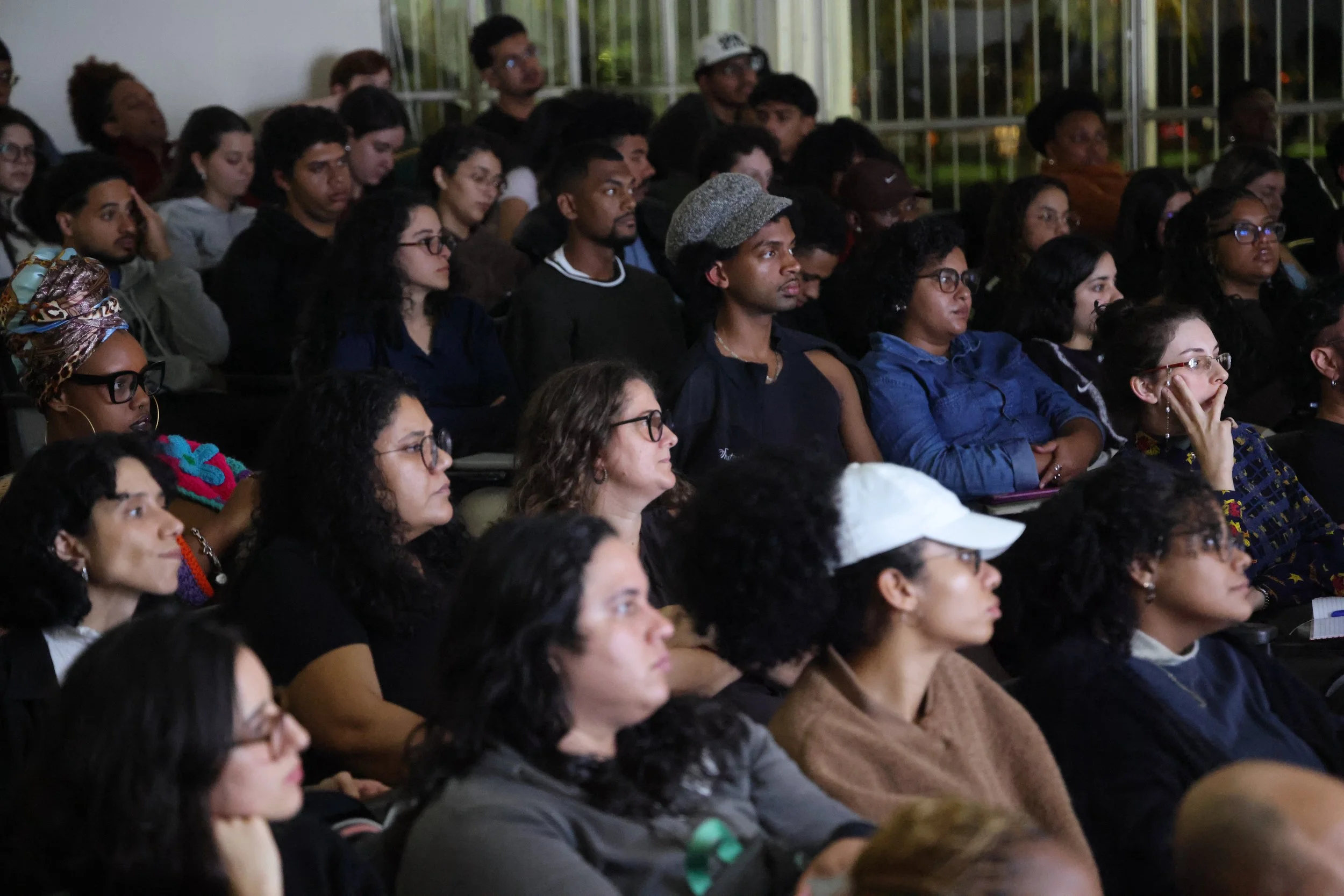
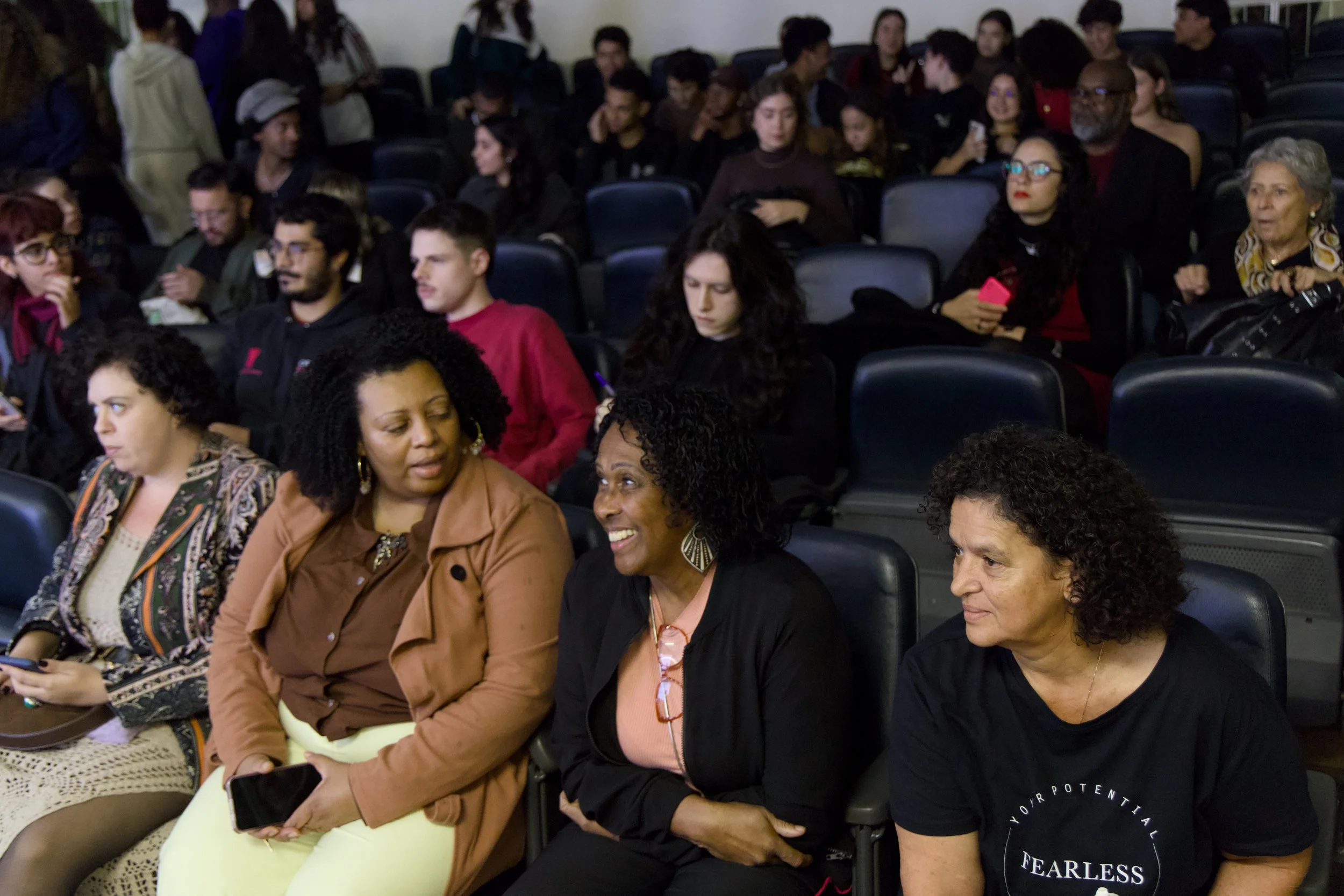
A witness's view—the author among a community transformed by presence and imagery. | Photograph by Lindeka Qampi.
I write this as one who witnesses and experiences within the dialogue and conversation. What I carried home from Juiz de Fora was not simply a record of an event, but a renewed understanding of what an image can do when it is made with intention and anchored in community. Muholi's work, and the way they shared it with us, was a masterclass in showing up - for your people, for your politics, for the stories that deserve to be held in the light.
This is what Beyra makes possible: edges that meet, margins that speak, and a growing archive of voices that refuse to be silent.
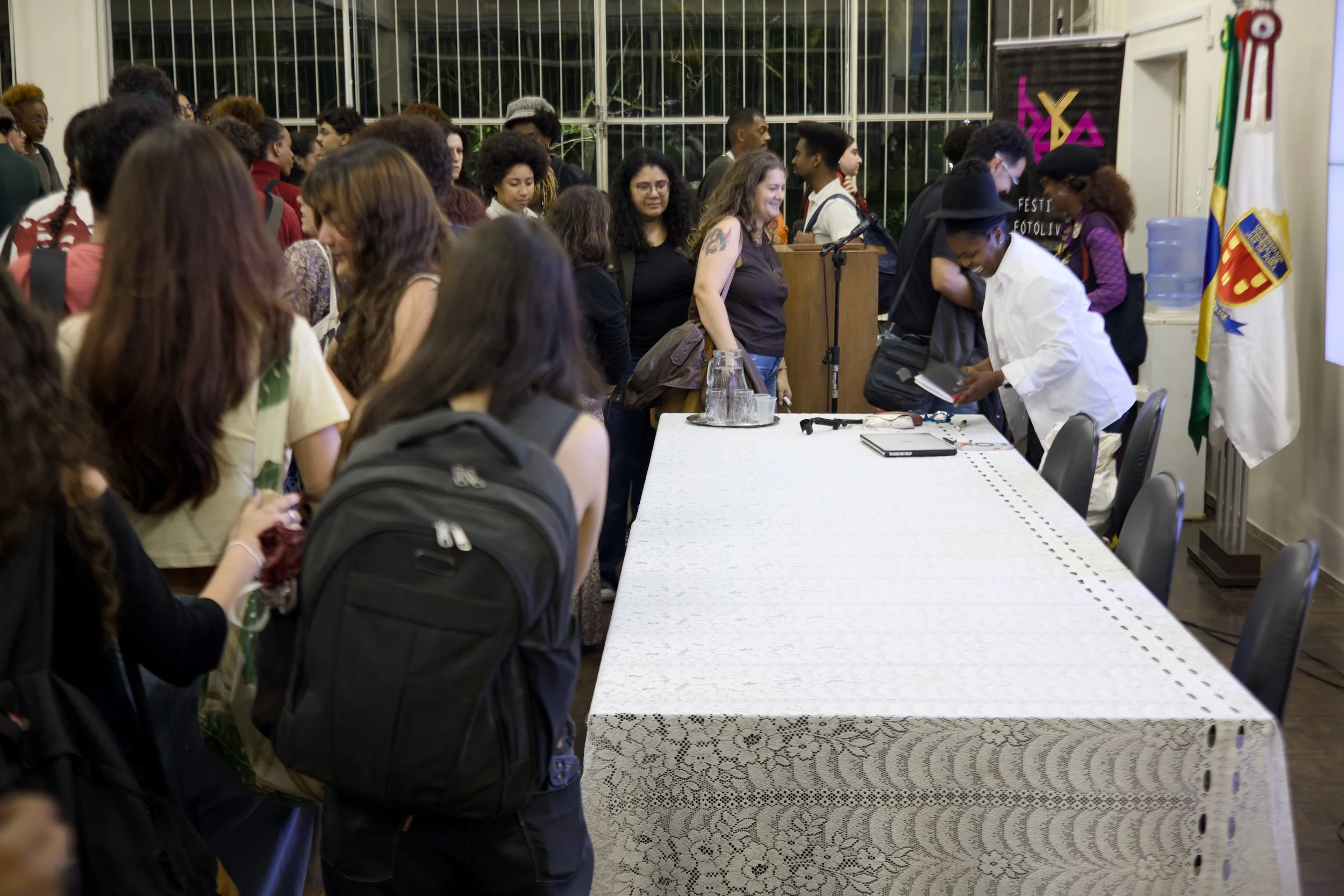
Zanele Muholi's archive is ongoing. The conversation in Brazil has only just begun.
