
PURELY, QUEERLY, AFRICAN : CAPTURING JOHANNESBURG PRIDE 2025
By Wakhe Sebenza
Saturday, 25 October 2025, marked the 36th edition of Johannesburg Pride, held in Sandton. The event brought together thousands in celebration of visibility, diversity, and community pride. I arrived early in the morning, before the stage was even ready for the media check-in, to secure accreditation and get a sense of the day's setup. Over a quick coffee and chat with Executive Director Kaye Ally, I gained a deeper appreciation for the scale of work and coordination that goes into making Pride possible each year.
When Kaye Ally first became involved in 2013, Johannesburg Pride had almost faded into obscurity following the dissolution of the previous Pride board. At that time, there was no clear vision or leadership to guide the event forward. She initially joined in a supporting capacity as a project manager, her professional field, simply helping where she could. As the year went on and fewer people remained committed, Kaye recognised the urgent need for stable leadership and stepped up to ensure that Pride would not disappear from Johannesburg’s cultural and activist landscape. Through her dedication and consistency, the event slowly regained structure, visibility and purpose.
Fourteen years later, Johannesburg Pride stands as a testament to that commitment, a thriving platform for celebration, advocacy and community visibility in South Africa's largest city. “Now we need to make sure that what we've created stays alive, that there’s a clear succession plan for the future. It's important to recognise that Pride continues to grow and that growth shows we're responding to a real need within the community. You’re never going to please everyone, but when you look at the number of people who show up and represent themselves at Johannesburg Pride, it's clear we're speaking to a large part of the community,” says Executive Director Kaye Ally.
When asked about the challenges of creating a safe and inclusive space for the LGBTQI+ community, Kaye Ally explains, “Every year brings a new challenge.” She describes organising Johannesburg Pride as a process that often feels like starting from scratch each time. Despite the scale and visibility of the event, corporate buy-in remains limited, making it difficult to fully cover the costs. “The more Pride grows, the more expensive it becomes,” she notes. “It’s a real challenge to maintain the standard we've built while ensuring the event remains free and accessible to everyone.” To help sustain Pride financially, the organisation introduces small income streams such as VIP and corporate lounges, while continuously seeking ways to balance community participation with sponsorship support. For Kaye and her team, the goal remains clear: to keep Pride alive, inclusive and free, a celebration that truly belongs to the people.
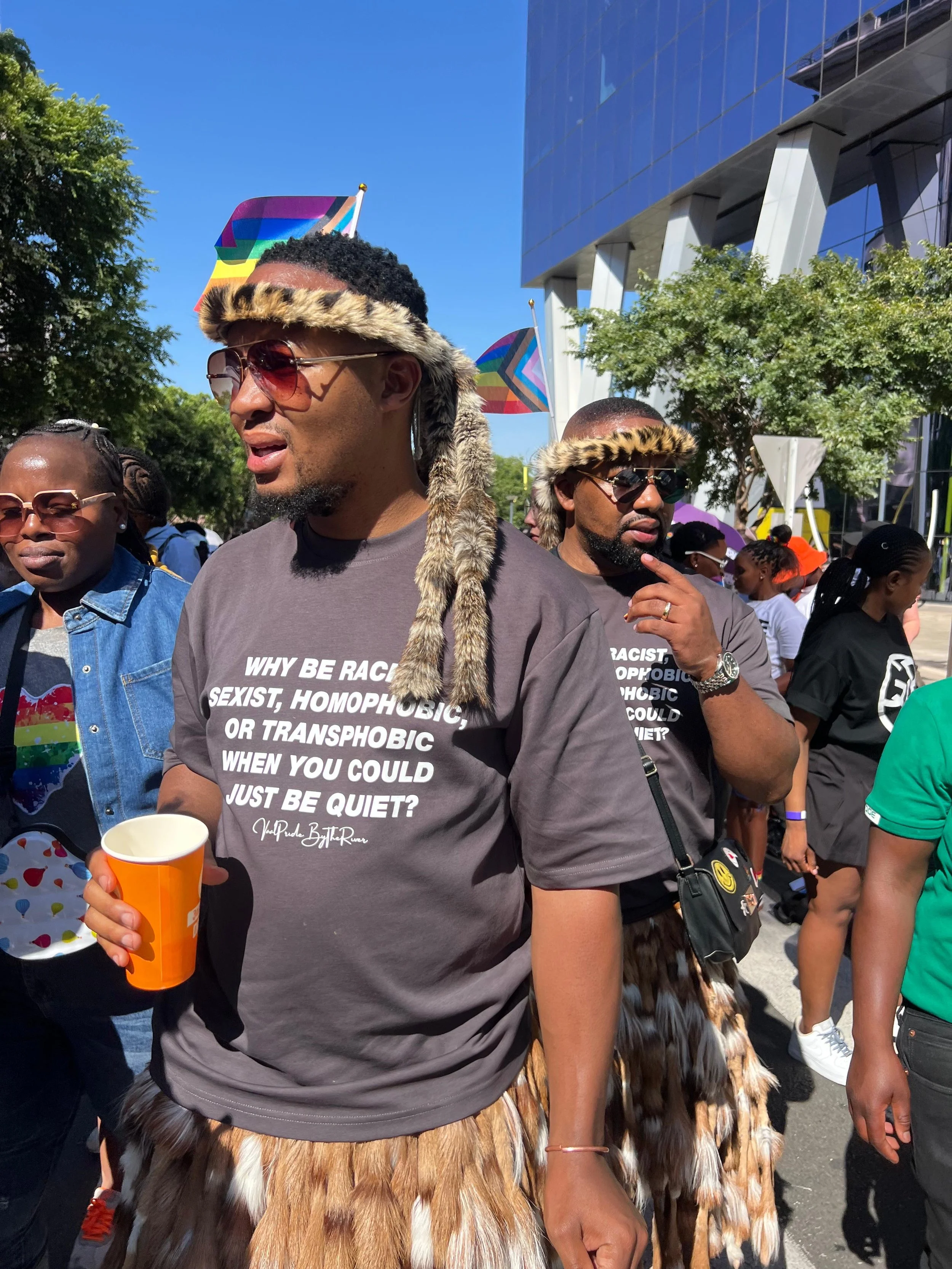
This year’s theme, “Purely, Queerly, African,” embodied a spirit of reclamation and belonging. It affirmed that queerness and Africanness are not opposing forces, but identities that coexist powerfully. The theme also arrived in the wake of public debate over whether queer people should wear traditional attire, a notion that many found deeply misguided.
As many participants expressed, queerness does not erase one's culture or heritage. Even within queer identity, there remains pride in where one comes from, in the traditions and roots that shape one's sense of self. A number of attendees arrived dressed in their traditional regalia, making a powerful statement: to be queer is also to be African.
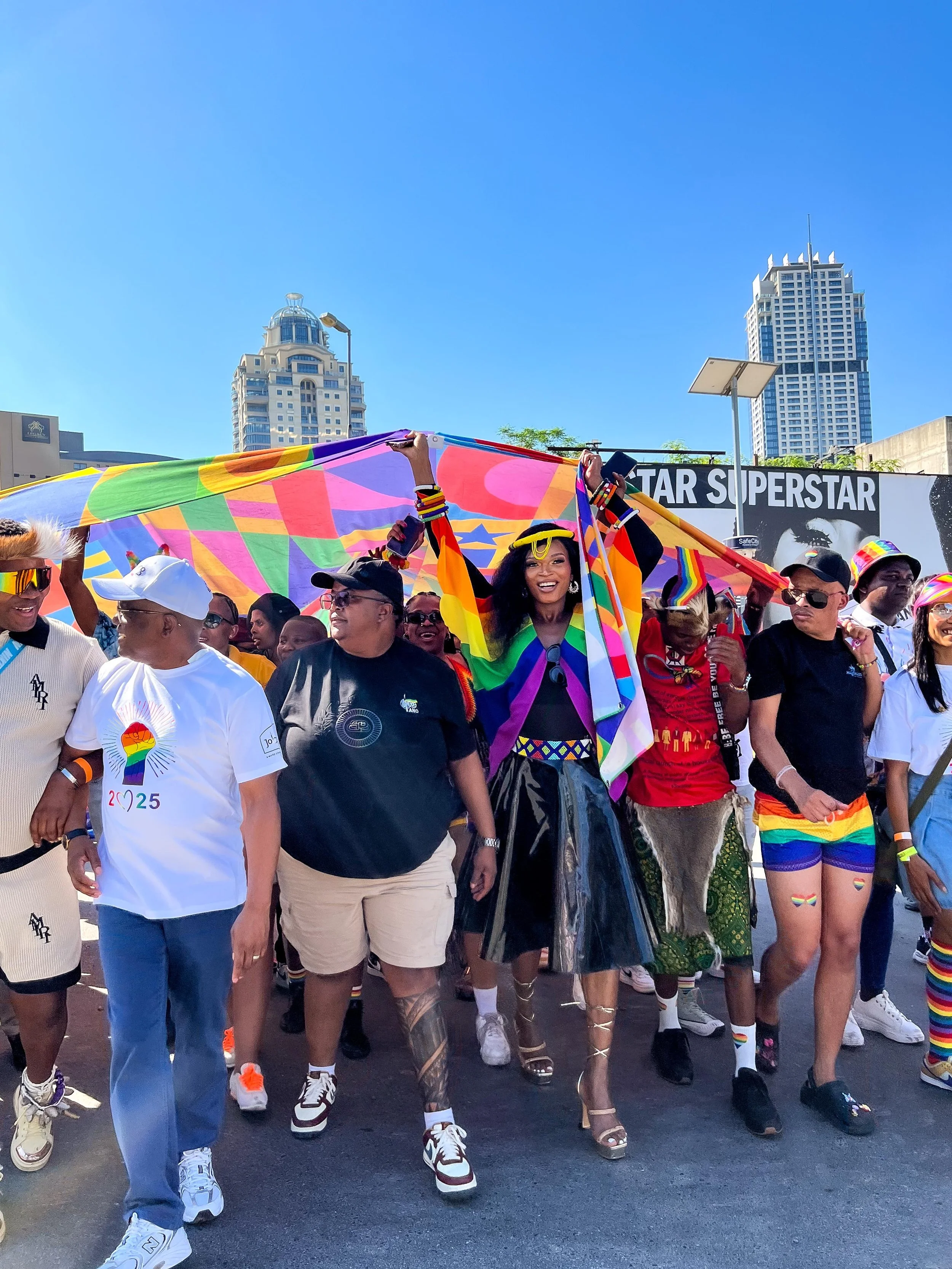
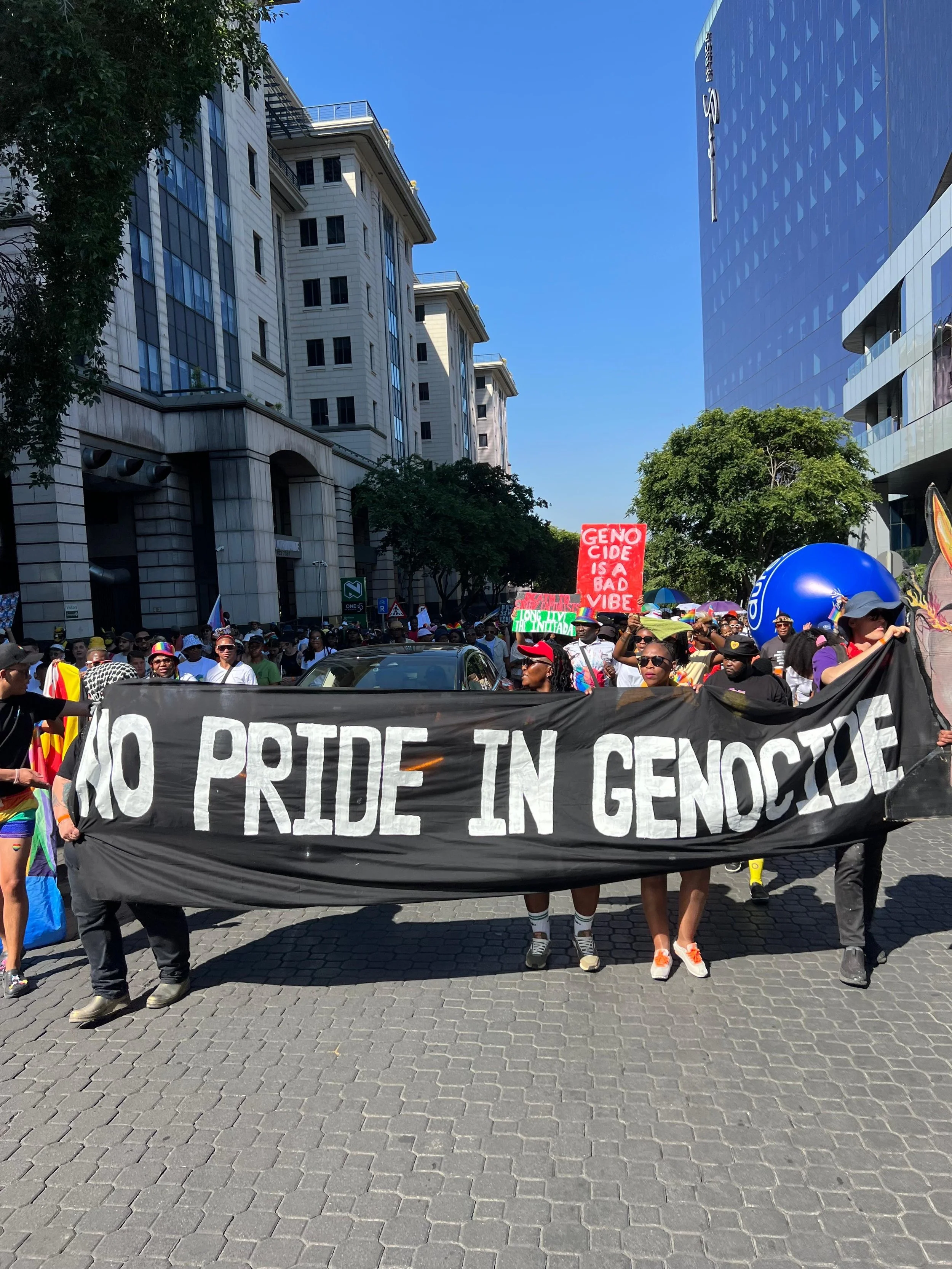
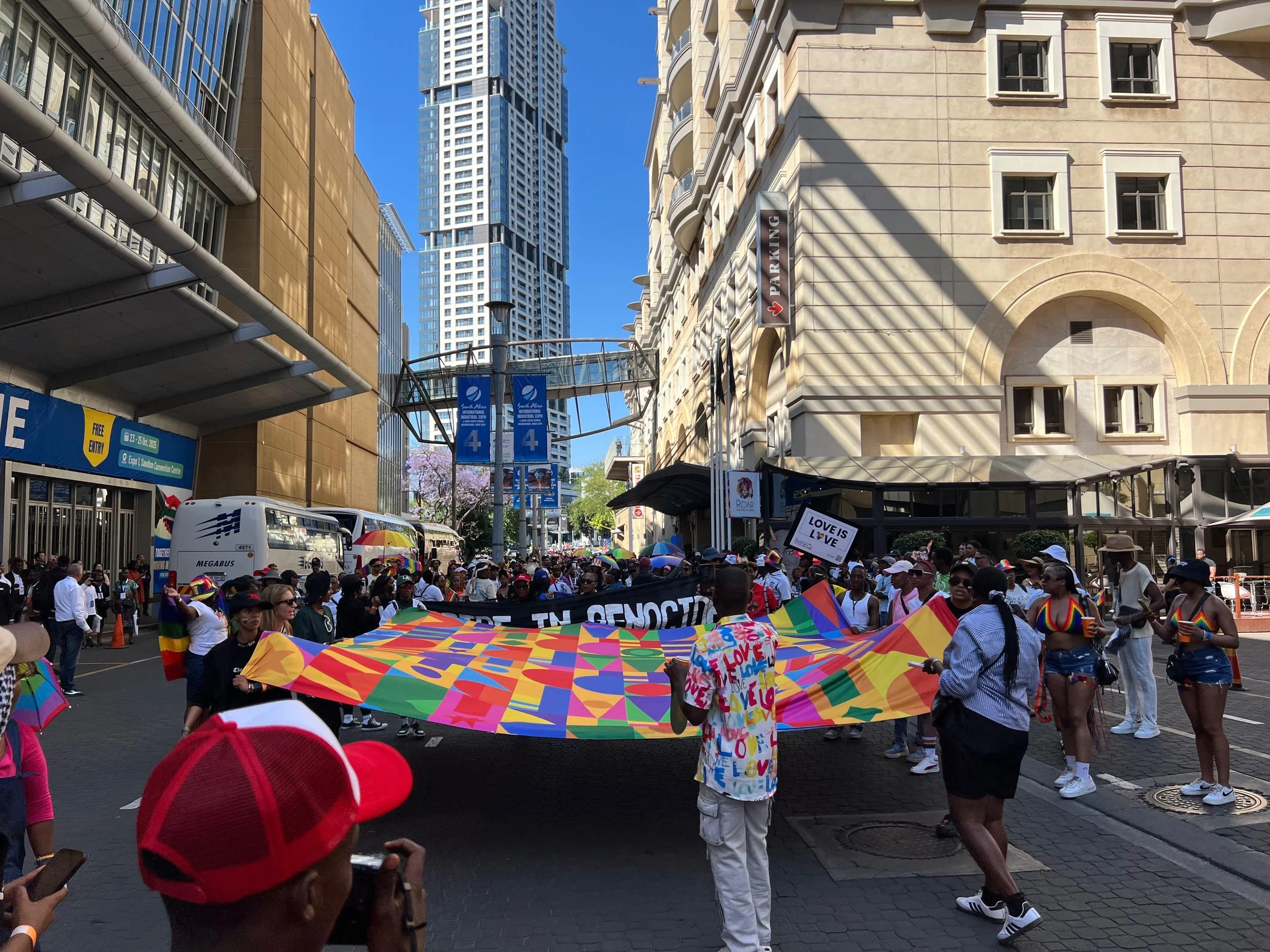
The Johannesburg Pride March, the heart of the celebration, brought together people from all walks of life—activists, allies, families and first-time attendees. Flags waved high, and chants of visibility and love carried over the city's skyline. For me, the march was a blur of colour, movement and emotion, a living canvas that I wanted to capture from every possible angle. From the moment the procession began, I found myself constantly on the move, running from the back to the front, weaving through the crowd, trying to catch each fleeting moment that told a bigger story.
When asked what the next generation should focus on to continue advancing equality and visibility, Kaye Ally reflected on the evolving role of Pride: “Pride is a platform for visibility. We have equality on paper, but there's still work to do for it to translate into societal integration, acceptance, tolerance, love and support. There are pockets of it, but it's not yet widespread.”
Her words serve as a reminder that while Johannesburg Pride celebrates progress, the work of building a truly inclusive and accepting society continues, and the next generation has a vital role to play in carrying that mission forward.
